Minggu, 14 Juli 2013

J.K. Rowling facts


Here is a look at the life of J.K. Rowling, author of the Harry Potter book series.

Personal:
Birth date: July 31, 1965

Birth place: Gloucestershire, England

Birth name: Joanne Rowling

Father: Peter Rowling, aircraft factory manager

Mother: Anne (Volant) Rowling, lab technician

Marriages: Neil Murray (December 26, 2001-present); Jorge Arantes (1992-1995, divorced)

Children: with Murray: Mackenzie Jean, January 23, 2005; David Gordon, March 24, 2003; with Arantes: Jessica, July 27, 1993

Education: University of Exeter, B.A. in French and the Classics, 1986; Moray House School of Education at The University of Edinburgh, 1995-1996, received a postgraduate certificate in modern languages.

Other Facts:
Born Joanne Rowling (pronounced roll-ing), she has said that her publishers wanted another initial so she gave herself the middle name Kathleen, after her paternal grandmother.

J.K. Rowling is now one of the richest women in the United Kingdom.

The Harry Potter movies were nominated for 12 Academy Awards.

Timeline:
1971 - Writes her first book, "Rabbit," at age six.

1987 - Works as a human rights researcher for Amnesty International.

1990 - Comes up with the idea for Harry Potter on a train ride from Manchester to London.

1991-1993 - Teaches English in Portugal.

1994 - On public assistance and living in Edinburgh, Scotland, she writes "Harry Potter and the Philosophers' Stone" in coffeehouses while her daughter naps.

July 1997 - "Harry Potter and the Philosopher's Stone" (UK title) first printing.

September 1998 - "Harry Potter and the Sorcerer's Stone" (U.S. title) first printing.

June 2, 1999 - The second book in the series, "Harry Potter and the Chamber of Secrets," is released in the United States. It was published in the United Kingdom on July 2, 1998.

September 9, 1999 - The third book, "Harry Potter and the Prisoner of Azkaban," is published in the United States. It was released in the UK on July 8, 1999.

1999 - Scholastic, the American publisher of the Harry Potter series, is sued by Nancy Stouffer on grounds of trademark infringement. Stouffer claims elements from the Harry Potter series were taken from her 1984 book "The Legend of Rah and the Muggles."

July 8, 2000 - "Harry Potter and the Goblet of Fire," the fourth book in the series is published simultaneously in the United Kingdom, the United States, Canada and Australia.

March 2, 2001 - Is awarded an Order of the British Empire (OBE) by H.R.H. Prince Charles.

March 2001 - Rowling releases "Fantastic Beasts and Where to Find Them" and "Quidditch Through the Ages," two books that appear in the Harry Potter series. The proceeds of more than £17 million are donated to the charity Comic Relief.

November 2001 - The first film, "Harry Potter and the Sorcerer's Stone," opens.

2002 - Tops a British survey as the richest woman in Britain, having made more than £48 million in 2001.

2002 - The 1999 lawsuit against Scholastic is dismissed when the judge rules that Nancy Stouffer "perpetrated a fraud" on the court.

June 21, 2003 - "Harry Potter and the Order of the Phoenix," the fifth book in the series is published.

2004 - Forbes estimates Rowling's worth at $1 billion, making her the first billion-dollar author.

July 16, 2005 - The sixth book, "Harry Potter and the Half-Blood Prince," is released.

September 6, 2005 - Unveiling of J.K. Rowling's official portrait for the National Portrait Gallery of London.

July 21, 2007 - The seventh and final book, "Harry Potter and the Deathly Hallows," is released and sells 8.3 million copies in the United States in its first 24 hours.

October 2007 - Along with Warner Brothers, sues publishing house RDR Books for copyright infringement regarding the Harry Potter brand. RDR is planning to release an encyclopedia of the seven Harry Potter books. Rowling is planning her own book of the same nature with the proceeds to go to charity.

June 5, 2008 - Delivers the commencement address at Harvard University and also receives an honorary degree.

September 8, 2008 - Wins lawsuit against RDR Books' Steven Jan Vander Ark, the author of a lexicon of the world of Harry Potter. The judgment blocks publication and awards damages of $6,750.

September 20, 2008 - Announces she donated £1 million to the Labour Party.

January 16, 2009 - Vander Ark's rewritten and renamed book, "The Lexicon: An Unauthorized Guide to Harry Potter Fiction and Related Materials," is released. This book is supposed to be a complete reference work for all seven Harry Potter novels.

February 2009 - French President Nicolas Sarkozy presents the Legion of Honor award to Rowling.

June 2009 - Rowling and her British publisher, Bloomsbury, are named in a lawsuit filed in London when relatives for the estate of writer Adrian Jacobs, who died in 1997, claim Rowling plagiarized her fourth book "Harry Potter and the Goblet of Fire" and other material from Jacobs' 1987 book "The Adventures of Willy the Wizard."

2010 - Donates £10 million for a research clinic at The University of Edinburgh. The Anne Rowling Regenerative Neurology Clinic is named after Rowling's mother, who died in 1990 from complications related to multiple sclerosis.

June 18, 2010 - Grand opening of The Wizarding World of Harry Potter at Universal Studios in Orlando, Florida.

July 2010 - The heirs of Adrian Jacobs extend the lawsuit to include Scholastic, the American publishers of "Harry Potter and the Goblet of Fire."

October 1, 2010 - In an interview with Oprah Winfrey, Rowling says she hasn't ruled out adding a few new titles to the Harry Potter book series.

November 19, 2010 - The movie "Harry Potter and the Deathly Hallows, Part 1" opens in the UK and the United States. Rowling is listed as a producer.

January 2011 - A federal judge in New York dismisses the U.S. plagiarism case filed by the relatives of Adrian Jacobs.

June 23, 2011 - Via YouTube Rowling announces a new project, a website, Pottermore.com, that will be an "online reading experience like no other." - part digital interactive playground and part e-store where the entire series will be available as e-books for the first time.

July 15, 2011 - The final movie in the series, "Harry Potter and the Deathly Hallows, Part 2," opens in the United States and the UK. Rowling is credited as a producer.

July 2011 - The British plagiarism lawsuit filed by the relatives of Adrian Jacobs ends after the claimants fail to pay the mandated security amount.

November 24, 2011 - Testifies before the Leveson Inquiryregarding journalistic standards in the UK. In her testimony she reviews parts of her 33 page statement given November 2, where she states that some members of the British journalism community engage in, "...behaviour that is illegal, and I think unjustifiably intrusive."

April 16, 2012 - Pottermore.com goes live. Rowling announces she's writing a Harry Potter encyclopedia with the proceeds to be donated to charity.

May 8, 2012 - Rowling is granted the Freedom of the City of London, one of the oldest traditional ceremonies.

September 27, 2012 - Releases new book, "The Casual Vacancy," her first novel specifically geared toward adults.

Source & Read more: CNN

Sabtu, 22 Juni 2013

Robert Downey Jr to reprise Iron Man in Avengers sequels

Image link
Robert Downey Jr will reprise his role as Iron Man in two forthcoming Avengers sequels, it has been announced.

Downey Jr, who first played the comic book role in 2008, is currently the toast of the box office having starred in two of the top five earning films of all time in the past 12 months.

Iron Man 3 and Avengers Assemble have collectively earned over $2.7 billion (£1.7bn) worldwide to date.

The Avengers 2 will open in May 2015, with Joss Whedon returning as director.

Downey, 48, was one of the main stars of 2012's Avengers Assemble, which united superhero characters Iron Man, The Hulk, Captain America, Thor and the Black Widow, as played by Mark Ruffalo, Chris Evans, Chris Hemsworth and Scarlett Johansson respectively.

All four of the stars are expected to join Downey Jr in the forthcoming films.

A statement on the Marvel website said Avengers 2 will feature "favourites from the first Avengers film and new Marvel characters never before seen on the big screen."

Iron Man 3 - the third instalment in the franchise centred on billionaire crime-fighter Tony Stark - was released in the UK last month. It has become the highest-grossing film of the year, with $1.2 billion (£775m) in global ticket sales.

Downey Jr has had a long and colourful career, beginning with early Oscar-nominated success in Chaplin in 1992 and critical acclaim in TV hit Ally McBeal.

A stint in prison during years of drug abuse curtailed his career before a remarkable comeback in box office hits such as Iron Man, Sherlock Holmes and cult hit Tropic Thunder, which won him his second Oscar nomination in 2009.

Source: BBC News

Minggu, 16 Juni 2013

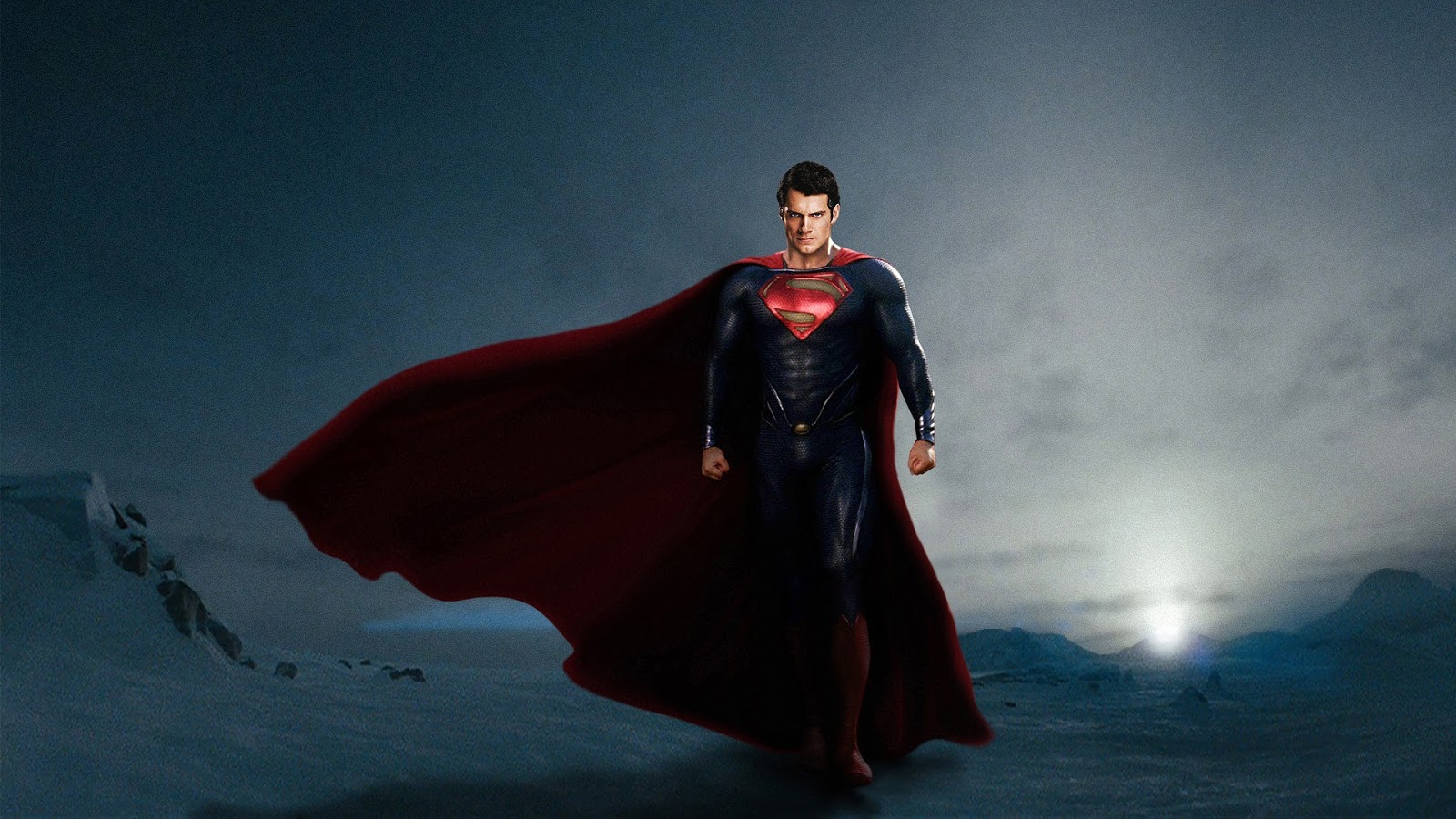
Facts You Might Not Know About Superman


Many of us know the basics after having seen at least one cartoon, movie or TV show based on Superman comic books. When the planet Krypton was about to blow up due to a chain reaction at its core, scientist Jor-El and his wife Lara sent their baby Kal-El (whose name meant “star-child”) into a rocket aimed for Earth. There, he was raised on a farm in Kansas by Jonathan and Martha Kent, who named him Clark. He later became a journalist at The Daily Planet and led a double-life as the world-famous superhero called Superman.

Just about everyone has heard this story (and if you haven’t, seriously, where have you been?). And everyone knows Lois Lane is his love and Lex Luthor is his enemy. Most people know Kryptonite is bad, that Superman has a clubhouse in the Arctic Circle called the “Fortress of Solitude.” But as DC Comics gets set to celebrate 700 issues of the Superman comic book this week, here are some things you may not have known about the Last Son of Krypton.
1. It’s not just about the glasses.
Clark's disguise isn't as simple as slicked back hair and glasses. The lenses of his glasses are slightly tinted, changing the shade of his eyes. Thanks to incredible control over his muscles and vocal cords, Superman actually gives himself a different voice when he’s Clark Kent. Looser clothing and slouching over gives a different impression of his body. And thanks to studying some acting techniques, he completes the disguise by employing very different body language as Clark. There’s also the advantage of our next fact ...
2. Clark Kent and Superman HAVE been seen together.
The DC Universe has heroes with various abilities. On occasion, friends of Superman who have the ability to shape-shift have masqueraded as Clark Kent, allowing the famous reporter and the Man of Steel to be seen and photographed together at the same time. To the general public, they are friends who simply bear a great resemblance to each other.
3. The “S” isn’t just for Superman.
The famous S-shield is not just Superman's family crest. First hinted at in the 1978 feature film, in the comic book story “Superman: Birthright” and the series “52”, we learned that it's also a Kryptonian symbol that means “hope.” Interestingly, drawing the S-shield upside down changes the meaning to “resurrection.”
4. Even superheroes need safeguards.
Clark actually wasn’t thinking about secret identities when he started wearing glasses as a freshman in high school. Around this time, Clark’s full powers were finally emerging and he had a tough time learning how to control them. Martha Kent had noticed that his heat-vision didn’t burn through the rocket that had brought him to Earth, so she took glass pieces from its window and put them into frames. Now if Clark’s heat-vision ever sparked up accidentally when he got excited, the glasses would block it and no one else would be the wiser.
5. It wasn’t always the “American way.”
Originally, Superman’s catchphrases called him the “champion of the oppressed” and said he was dedicated to “truth and justice.” Folks didn’t say he also fought for “the American Way” until the 1940s during radio broadcasts of that era, and the phrase became an iconic part of Superman lore when the TV series starring George Reeves began airing in the 50s.
6. Superman’s a time traveler.
As a kid in high school, Clark was visited by the Legion of Super-Heroes, super-powered teens from the 30th century who had been inspired by his legend. Seeing he was desperate for a chance to hang out with kids who were more like him, the Legion regularly brought Clark into the far future to join them in adventures. Whenever Clark returned home, part of his memories were clouded so he couldn’t alter his own future. These trips with the LSH helped Superman learn to become a hero and are part of the reason he maintains an optimistic view of the human race. He believes we’re worth it because he’s seen what we achieve 1,000 years from now.
7. He wasn’t always able to fly.
When Superman first appeared in 1938, the comic said that he was incredibly strong, could withstand anything less than a bursting shell from a tank, and was able to leap 1/8th of a mile. And that was it! His ability to fly first showed up in the radio series and his original cartoons. In the comics, he officially gained the ability to fly in 1941, nearly two years after his first story. In the years since his creation, he's been given new abilities and had some later taken away. Nowadays, his arsenal includes heat-vision, incredible strength/stamina, enhanced senses, X-Ray vision, arctic breath, super-speed, increased healing, near-complete body/muscle control, and a skin-tight force-field that makes him invulnerable to most forms of harm.
8. He didn’t always date Lois Lane.
Reporter Lois Lane is his wife, but she wasn’t the first one to capture Superman' attention and heart. In high school, Clark had deep feelings for his best friend Lana Lang, who was also the first person outside of his foster parents to learn about his strange powers. As a teen, Clark also had a crush on Saturn Girl, a member of the Legion of Super-Heroes. In college, he seriously dated a girl named Lori Lemaris, who turned out to be a mermaid from Atlantis. During a time travel adventure to Krypton’s past, Superman became involved with Lyla Lerrol, a famous Kryptonian actress. And for a while, Superman had a crush on Wonder Woman (hey, who wouldn’t?).
9. Batman owns Superman.
Okay, that’s an exaggeration, but you’d be surprised how much Bruce Wayne is a part of Clark’s life. Bruce owns the building that Clark and Lois live in and, in fact, gave them their apartment as a wedding gift. And some years ago when it needed a new financial backer, Wayne Enterprises bought the Daily Planet newspaper, where Lois and Clark both work.
10. Kryptonite isn’t his only weakness.
Superman has faced many alien and superhuman enemies whose strength rival his own and whom have been able to injure him. Since he draws his power from our yellow sun, standing in the light of a red sun (such as the one Krypton orbited) immediately robs Superman of his powers, leaving him vulnerable to fists and bullets like anyone else. Clark also lives in a world where magic is real and simply being an alien offers no special protection against most sorcery. In fact, the chaotic energies of magic disrupt his force-field, meaning demons, vampires and werewolves can draw blood if Superman lets them get close enough.

Source & Read more about Superman on newsarama.com

Outstanding mistakes of all time


After a string of newsworthy errors, a stumble through the annals of time to choose a few favourites from history.
It has been a hectic few days for news of mistakes. Well, yes, I know that to be human is to err, but we experienced connoisseurs of the bish and the blunder look out for the ones exemplifying that to be human is also often splendidly absurd. If I might quote Puck, from the Bard's timely A Midsummer Night's Dream: "Lord, what fools these mortals be!"

Consider, for example, the German bank clerk who fell asleep in mid transfer of 62.40 euros while his finger was on the "2" key and ended up transferring 222,222,222.222 euros instead. Or the alleged mix-up at a cemetery in Kalamazoo, Michigan, which saw a couple being buried apart instead of under a headstone reading "Together for Ever".
Could happen to anyone. Which couldn't be said for Flt Lt Ben Plank, of the Red Arrows display team, who pushed the wrong button over Shropshire and sent out blue smoke behind him, rather than red, thus rather ruining the usual meticulously colour-coded show of red, white and blue.
Flt Lt Plank's is my favourite of those, combining as it does maximum impact, least harm and the simplest of errors. Others over time have, of course, had more consequence: one thinks of Eve and that apple; the Trojans and that Greek gift; the smouldering baker's oven in Pudding Lane; the Light Brigade and the wrong valley; Neville Chamberlain and that piece of paper; the Decca Records executive who turned down The Beatles because "guitar groups are on the way out"; and the less well-known, such as the Canadian seeking to escape the danger of nuclear war who emigrated to the Falklands shortly before the Argentine invasion.
For sheer consistency, though, I would recommend Mr Homer Simpson of Springfield, USA, the Laurel, Hardy and Billy Bunter of our day. And while we are with moving pictures, let me salute Harry Warner, of Warner Bros, for this splendid quote from 1927: "Who the hell wants to hear actors talk?"
Allow me now, then, to present my Outstanding Mistakes of All Time, not to mock but to sympathise, remembering the words of John Bradford (1510-55): "There but for the grace of God, go I."
1. Gustavus Adolphus, King of Sweden (1594-1632), disdained the steel armour offered by his aides at the Battle of Lützen, saying: "The Lord God is my Armour!" Yes, the Battle of Lutzen was indeed in 1632.
2. Dennis Laroux, a US tattooist, angered three members of an all-girl chapter of Hell's Angels when he tattooed Stan's Slaves on their breasts rather than Satan's Slaves.
3. Sophia Hadi drove all the way from Leeds to Washington, Tyne and Wear, after a friend there reported hearing a rare song thrush, only to find it was, in fact, the noise made by a fork lift truck reversing at the local Asda.
4. Peter Crawford's self-defence in a New York court suffered slightly after he asked the key witness: "Did you get a good look at my face when I snatched your bag?"
5. Maj Gen John Sedgwick (1813-1864) was unimpressed by Confederate sniper fire at the Battle of Spotsylvania. "They couldn't hit an elephant at this distance!"
6. Rommell decided that he could go home to celebrate his wife's birthday because Normandy was so quiet in June 1944.
7. The Liverpool Echo, in a rare error, once described Violet, the mother of the Kray twins, as "Mrs Violent Kray".
8. This was Sir William Preece, chief engineer of the General Post Office, in 1876: "The Americans have need of the telephone, but we do not. We have plenty of messenger boys."
9. The popularity of spinach as a health food, which resulted in Popeye the Sailor Man and generations of children staring miserably at a plate bearing the canned product, resulted from a misplaced decimal point in calculations of the amount of iron in it.
10. In Sonning Common, near Reading, in 2003, an unidentified motorist - you know who you are - collided with and knocked down the sign reading, "Sonning Common welcomes careful drivers".
Actually, to demonstrate how easy it is to err, I should mention that the story about the spinach is itself a mistake, and that there are doubts about Rev Bradford's authorship of going but for the grace of God (although it is true that he was burnt at the stake). But, as you will have noticed, human error is notoriously difficult to eliminate (as I might well have inadvertently illustrated).
What to do? There is no shortage of advice, from Sophocles to Einstein, about learning from them: Sir William Preece soon changed his mind about the telephone, for example. My favourite comment in the field, however, remains this, from the late Peter Cook: "I have learned from my mistakes, and I am sure I can repeat them exactly".

Sabtu, 15 Juni 2013

Google tests balloons to beam internet from near space

Google is launching balloons into near space to provide internet access to buildings below on the ground.

About 30 of the superpressure balloons are being launched from New Zealand from where they will drift around the world on a controlled path.

Attached equipment will offer 3G-like speeds to 50 testers in the country.

Access will be intermittent, but in time the firm hopes to build a big enough fleet to offer reliable links to people living in remote areas.

It says that balloons could one day be diverted to disaster-hit areas to aid rescue efforts in situations where ground communication equipment has been damaged.

But one expert warns that trying to simultaneously navigate thousands of the high-altitude balloons around the globe's wind patterns will prove a difficult task to get right.

Airborne for months

Google calls the effort Project Loon and acknowledges it is "highly experimental" at this stage.

Each balloon is 15m (49.2ft) in diameter - the length of a small plane - and filled with lifting gases. Electronic equipment hangs underneath including radio antennae, a flight computer, an altitude control system and solar panels to power the gear.

Google aims to fly the balloons in the stratosphere, 20km (12 miles) or more above the ground, which is about double the altitude used by commercial aircraft and above controlled airspace.

Google says each should stay aloft for about 100 days and provide connectivity to an area stretching 40km in diameter below as they travel in a west-to-east direction.

The firm says the concept could offer a way to connect the two-thirds of the world's population which does not have affordable net connections.

"It's pretty hard to get the internet to lots of parts of the world," Richard DeVaul, chief technical architect at Google[x] - the division behind the scheme - told the BBC.

"Just because in principle you could take a satellite phone to sub-Saharan Africa and get a connection there, it doesn't mean the people have a cost-effective way of getting online.

"The idea behind Loon was that it might be easier to tie the world together by using what it has in common - the skies - than the process of laying fibre and trying to put up cellphone infrastructure."

A group of about 50 testers based in Christchurch and Canterbury, New Zealand, have had special antennae fitted to their properties to receive the balloons' signals.

Google now plans to partner with other organisations to fit similar equipment to other buildings in countries on a similar latitude, so that people in Argentina, Chile, South Africa and Australia can also take part in the trial.

However, they typically remain airborne for up to a few days at a time rather than for months, and are not as wide-ranging. One expert cautioned that Google might find it harder to control its fleet than it hoped.

"The practicalities of controlling lighter-than-air machines are well known because of the vagaries of the weather," said Prof Alan Woodward, visiting professor at the University of Surrey's department of computing.

"It's going to take a lot of effort to make these things wander in an autonomous way and I think it may take them a little longer to get right than they might believe."


What are superpressure balloons?

Superpressure balloons are made out of tightly sealed plastic capable of containing highly pressurised lighter-than-air gases.

The aim is to keep the volume of the balloon relatively stable even if there are changes in temperature.

This allows them to stay aloft longer and be better at maintaining a specific altitude than balloons which stretch and contract.

In particular it avoids the problem of balloons descending at night when their gases cool.

The concept was first developed for the US Air Force in the 1950s using a stretched polyester film called Mylar.

The effort resulted in the Ghost (global horizontal sounding technique) programme which launched superpressure balloons from Christchurch, New Zealand to gather wind and temperature data over remote regions of the planet.

Over the following decade 88 balloons were launched, the longest staying aloft for 744 days.

More recently, Nasa has experimented with the technology and suggested superpressure balloons could one day be deployed into Mars's atmosphere.

UN: India to be world's most populous country by 2028

India looks set to overtake China as the world's most populous country from 2028, according to the United Nations.

At that point, both nations will number 1.45 billion people each. Subsequently India's population will continue to grow until the middle of the century, while China's slowly declines.

The UN also estimates that the current global population of 7.2 billion will reach 9.6 billion by 2050.

That is a faster rate of growth than previously estimated.

The population growth will be mainly in developing countries, particularly in Africa, the UN says.

The world's 49 least developed countries are projected to double in size from around 900 million people in 2013 to 1.8 billion in 2050, whereas the population of developed regions will remain largely unchanged.

The UN said the reason for the increase in its projection is largely new information on fertility levels in certain high birth rate countries.

Nigerian growth

Large developing countries, such as China, India and Brazil, have seen a rapid fall in the average number of children per woman, but in other nations, such as Nigeria, Niger, Ethiopia and Uganda, fertility levels remain high.

Nigeria's population is expected to exceed that of the US by the middle of the century, and could start to rival China's by 2100.

China's population is expected to start decreasing after 2030.

"Although population growth has slowed for the world as a whole, this report reminds us that some developing countries, especially in Africa, are still growing rapidly," commented Wu Hongbo, the UN's Under-Secretary-General for Economic and Social Affairs.

The United Nations publishes an assessment of past, current and future population trends every two years, in a recurrent series known as theWorld Population Prospects.

Researchers have used data for 233 countries and areas to produce Friday's report.

Selasa, 21 Mei 2013

Cars used in Fast & Furious 6

1969 Dodge Charger Daytona
Lets take a look at some the cars being used in Fast & Furious 6, the most awaited movies for car and action lovers: I hope you will enjoy it.


1969 Dodge Charger Daytona


2010 BMW M5


Jensen Interceptor


1969 Mustang


1970 Ford Escort RS2000


Camaro SS and Eagle Speedster


The Ferrari SP1, based on the F430


Ginetta G60 sports car


Pagani Zonda


Nissan GT-R


classic Jaguar


Mercedes-Benz SLS AMG


Lotus Elise, the Mustang, Daytona, Escort, and Camaro