Tampilkan postingan dengan label Country Facts. Tampilkan semua postingan

Selasa, 16 Juli 2013

Five things you didn't know About British Royal babies

Amid all the excitement and wall-to-wall media coverage about the eagerly-awaited new addition to the royal family, you may think you know all you could ever want to about royal babies. But did you know...

A government minister used to be present at royal births, to make sure the baby was not switched

The practice is believed to have begun in 1688, when dozens of officials watched Mary of Modena, wife of James II, give birth to a son, to scotch rumors that Mary was not really pregnant and that the baby was to be smuggled into the room in a bedpan.

The tradition continued well into the 20th century. The last royal birth to be witnessed by a government minister was that of Queen Elizabeth II's cousin, Princess Alexandra in 1936, and the practice was only officially halted shortly before the birth of Prince Charles in 1948.

Royal husbands have not always attended the birth of their children
Queen Elizabeth II may not have had to contend with ministerial interference in her birth plan, but she also didn't have her husband there for support; while she gave birth to Prince Charles, Prince Philip, the Duke of Edinburgh was busy playing squash.


Prince Charles was on hand when Diana had Prince William, but William himself may not be there for his own child's birth -- expected any day now -- if he's at work as a search-and-rescue pilot when the big moment arrives.

If for any reason William can't get to the hospital on time, the Duchess of Cambridge is reported to have asked her mother, Carole Middleton, to be there to support her.

Queen Victoria was the first royal to use anesthesia in childbirth

The long-reigning monarch and mother-of-nine was given chloroform for pain relief during the births of her eighth and ninth children, Prince Leopold (born in 1853) and Princess Beatrice (born in 1857).

Her decision to opt for an anesthetic is credited with popularizing the use of painkillers during childbirth among the well-to-do of the time.

John Snow, the doctor who administered the drug, is better known as one of the founding fathers of epidemiology, after he traced a deadly outbreak of cholera to a Soho water pump.

Prince William was the first heir to the throne to be born in hospital
William was born in the private Lindo Wing of St Mary's Hospital, Paddington, on June 21, 1982. His brother was born at the same hospital two years later, and William's new son or daughter is also expected to come into the world there.

While that might seem the normal way of things, in fact it was something of a break with tradition -- until then, all heirs to the throne had been born at home (or at one of the royal family's homes at least).

Prince Charles was born at Buckingham Palace; Elizabeth II herself was born in the Mayfair home of her grandfather in 1926 -- though at the time she was not expected to become queen as her uncle, and not her father, was next in line to the throne.

Titled royal babies do not have surnames
Members of the royal family are famously burdened with plenty of names -- Prince William was christened William Arthur Philip Louis, and his father is Charles Philip Arthur George -- but many (those titled His or Her Royal Highness) do not have a surname.

Prince William and Prince Harry have used "Wales" at school and during their military careers, but this comes from their father's official title as Prince of Wales. William and Kate may continue to use this for their new baby.

As descendants of Queen Elizabeth II and the Duke of Edinburgh, they could also use Windsor, or Mountbatten-Windsor -- both of which are relatively new inventions, adopted during World War I to disguise the family's German origins.

Alternatively, the royal parents-to-be could even opt to found their own dynasty, using "Cambridge" as a surname.

Source & Check more news around the world: CNN

Sabtu, 15 Juni 2013

UN: India to be world's most populous country by 2028

India looks set to overtake China as the world's most populous country from 2028, according to the United Nations.

At that point, both nations will number 1.45 billion people each. Subsequently India's population will continue to grow until the middle of the century, while China's slowly declines.

The UN also estimates that the current global population of 7.2 billion will reach 9.6 billion by 2050.

That is a faster rate of growth than previously estimated.

The population growth will be mainly in developing countries, particularly in Africa, the UN says.

The world's 49 least developed countries are projected to double in size from around 900 million people in 2013 to 1.8 billion in 2050, whereas the population of developed regions will remain largely unchanged.

The UN said the reason for the increase in its projection is largely new information on fertility levels in certain high birth rate countries.

Nigerian growth

Large developing countries, such as China, India and Brazil, have seen a rapid fall in the average number of children per woman, but in other nations, such as Nigeria, Niger, Ethiopia and Uganda, fertility levels remain high.

Nigeria's population is expected to exceed that of the US by the middle of the century, and could start to rival China's by 2100.

China's population is expected to start decreasing after 2030.

"Although population growth has slowed for the world as a whole, this report reminds us that some developing countries, especially in Africa, are still growing rapidly," commented Wu Hongbo, the UN's Under-Secretary-General for Economic and Social Affairs.

The United Nations publishes an assessment of past, current and future population trends every two years, in a recurrent series known as theWorld Population Prospects.

Researchers have used data for 233 countries and areas to produce Friday's report.

Jumat, 09 November 2012

Facts about the Greek Economy


Facts about the Greek Economy

In writing this blog, I have come across several facts about the Greek economy that surprised me. In some cases, it was the fact itself that was the surprise; in others, it was the magnitude of something I already knew about. Here they are, along with links to the relevant posts.

Fact #1. Greek GDP is at 2004 levels, and it will take about a decade to reach pre-crisis levels. Greece’s GDP has been declining since Q4 2008, and is now just above 2004 levels. What is more, the initial program agreed to with the troika forecasted that real GDP would not reach its pre-crisis level until the end of the decade. A greater than anticipated recession means it could take past 2020 for Greece to recover to the income level it had coming into this crisis.


Fact #2. Tourism export revenues have declined 28% since 2000. When analysts discuss how the Greek economy may grow, there is an inevitable emphasis on tourism. But tourism has been in steep decline in the last decade. In 2000, Greece’s tourism revenue was €10 bn (based on customs data). Ten years later, it had fallen to €9.6 bn, a 4.5% drop. But if we factor in inflation, revenues from tourism have dropped 28% since 2000, reflecting the structural flaws in Greece’s tourism industry, which relate, chiefly, to getting more tourists who spend less money.

Fact #3. Net exports from shipping have declined 27% since 2000. Shipping, Greece’s other major export, has performed better than tourism but only marginally so. In 2000, Greece’s revenues from shipping netted €4.6 billion. By 2010, that number had fallen to €4.5 bn. Adding inflation means that the drop has amounted to 27%, although some years were better than others. The chief problem is that from a trade perspective, shipping affects both sides of the equation due to money spent to buy ships and on shipping related services. When we take out the outflow of money, the net effect for Greece has been declining.

Fact #4. Collecting 40% of tax arrears would eliminate the 2011 budget deficit. Weak tax collection forms a big part of Greece’s fiscal problem. In June 2011, the Ministry of Finance reported that tax arrears amounted to €41 bn. Of that number, 90% came from 6,500 people and from 8,200 corporations that owe over €150,000 each. Collecting those arrears would more than cover the projected 2011 budget deficit of less than €17 bn.

Fact #5. Employees in state-owned enterprises (SOEs) earn twice as much as employees in the private sector. One of the recurring themes in Greece’s political economy is the dichotomy between an insulated and well-paid public sector and a low-paid (at least for employees) private sector. According to data released by the ministry of finance, employees at SOEs earned, on average, €38,287 in 2008 – which is twice as high as the €19,147 earned in the private sector. For some SOEs, the gap was much higher.

Fact #6. Greeks are as likely to pay a bribe as Nigerians and Pakistanis. According to Transparency International, 18% of households in Greece reported paying a bribe in the last twelve months, versus an average 5% in Europe. That number puts Greece on par with Nigeria and Pakistan.

Fact #7. When you add private debt, Greece’s overall indebtedness is low in Europe. Everyone knows that Greece’s problem is debt. But it is, in fact, public debt that is the problem. A graph shown in a presentation by the former minister of finance adds public and private debt – when the two are combined, it is clear that Greece is at the low end of the spectrum. What distinguishes Greece is not high debt overall, but high government debt.

Fact #8. Greece’s debt was mostly accumulated in the 1980s and early 1990s. Greek society has yet to have a serious debate about how it got into this mess. What is amazing is to see just how recent this debt accumulation is: in 1980, Greece’s public debt was merely 22% of GDP; by 1993, it was 98% where it stayed (plus or minus) for over a decade before going higher in this crisis. In other words, Greece’s debt problem was mostly created over a 13-year period and it was perpetuated thereafter.

Fact #9: Greece had a relatively small state in 1980. Analysts with an eye to history will always point out that the Greek state has been omnipresent in Greek life since its inception. Yet that fact, while true, disguises the extent to which statism is a post 1980 phenomenon. In 1980, government spending amounted to 24% of GDP; by 1990, that number had risen to 45%. It kept rising, somewhat more modestly to 51% in 2009. The Greek government aims to bring that number back to 45% by 2015.

Fact #10. Greece’s relative standard of living dropped after 1980. In 1978, as Greece was about to join the European Economic Community, its per capita GDP was just 5% below the European average (on a PPP basis). In 2000, the gap was 30%. In retrospect, Greece’s entry into the EEC has been seen as a political gesture, and in many ways it was; but the gap between Greece and Europe was much narrower at the point of entry than ever since. Greece was close to Europe when it joined the EEC; it was only later that Greek living standards stagnated and fell relative to the rest of Europe. Europe moved on and Greece was left behind.

Author: Nikos Tsafos

Kamis, 16 Juni 2011

Interesting Facts about Indonesia

Stupas at Borobudur, the world's largest Buddhist temple, overlook Java's jungles.
Interesting Facts about Indonesia: If you planning to visit Indonesia or wanted to know really Interesting Facts about Indonesia, here you are at the right place. Check out: 
  • Boasting the world's largest Muslim population, this vast archipelago between Asia and Australia harbors a highly diverse people speaking more than 300 languages.
  •  From glittering beaches to isolated jungle villages, it offers endless studies in extremes.
  • The influence of the Dutch, who united the island chain in 1900, may be felt everywhere
  • Japan's wartime occupation, happily, is a distant memory.
  • Located at the intersection of two tectonic plates, the islands are prone to earthquakes and volcanic eruptions.
  • Life is defined by easeful charm and a warm sense of welcome.
  • Indonesia is the world's largest archipelago consisting of many thousands of islands. Around six thousand of the islands are inhabited.
  • The Indonesian name for Indonesia is "Tanah Air Kita" - Our Land and Water.
  • Indonesia's national motto is Unity in Diversity.
  • The highest point in Indonesia is Puncak Jaya (5,030 m) in the highlands of Papua.
  • Indonesia's region of Papua (formerly Irian Jaya) shares the island of New Guinea with Papua New Guinea.
  • The Indonesian administrative divisions of Kalimantan share Borneo with Malaysia and Brunei.
  • The islands of New Guinea and Borneo are two of the largest islands in the world.
  • The eruption of Mount Tambora, on Sumbawa Island, in 1815 was the most powerful volcanic eruption in recorded history. 1816 was known as the "Year Without Summer" because of the global climatic effects of the eruption.
  • In 1883 the volcanic island of Krakatoa (part of the Indonesian archipelago) was destroyed by a volcanic eruption. This caused a tidal wave that killed over thirty thousand people.
  • Earthquakes and volcanic eruptions sometimes cause a tsunami, a giant wave which can swamp islands and coastal settlements. A tsunami can travel as fast as 800 kph.
  • Indonesia is part of the Ring of Fire which includes about seventy-five percent of all the world's volcanoes. (The rim of the Pacific Basin is ringed with volcanoes, from Alaska through the USA, Mexico and South America, then on to New Zealand and up to Japan and Russia.).
  • In the early 1890s Eugene Dubois discovered a skull and thigh bone of Homo erectus in East Java. Dubois published his findings of "Java Man" in 1894, claiming that Homo erectus was an ancestor of modern humans.
  • The Sangiran Early Man Site, on the World Heritage List, is estimated to have been inhabited one and a half million years ago. Half of the world's hominid fossils have been found at Sangiran in Java.
  • Marco Polo was one of the first Europeans to visit Indonesia.
  • Europeans went to Indonesia in search of spices. Spices were a very valuable commodity in Europe.
  • Indonesia is one the world's largest producers of nutmeg.
  • By the late eighteenth century "Indonesia" was part of the Dutch colonial empire and known as the Netherlands East Indies.
  • Indonesia's island of Bali did not come under the control of the Netherlands until 1906. During the Dutch capture of the island many thousands of Balinese were killed. Puputan Square in Denpasar is named after the suicidal battle of the Balinese aristocracy in their struggle against the Dutch.
  • Between 1811 and 1816 (during the Napoleonic Wars), "Indonesia" came under Britishrule but was returned to the Dutch.
  • After the War (1939-1945) Indonesia declared independence. Sukarno, the independence leader, became the country's first president.
  • Following independence, the Dutch remained in control of the western part of New Guinea (now Papua). This territory was eventually passed to Indonesia under a United Nations agreement (1963).
  • In 1975 East Timor gained independence from the Portuguese but was annexed by Indonesia in 1976. East Timor voted for independence in 1999 but did not regain independence until 2002.
  • In October 2002 a terrorist bomb in Bali (Kuta town) killed over 180 people. Three years later, suicide bombings in Bali killed over twenty people.
  • In 2003 a car bomb outside the Marriott Hotel in Jakarta killed fourteen people. A year later, another car bomb in Jakarta outside the Australian embassy killed nine people.
  • On 26 December 2004, a quake occurred under the sea near Aceh in north Indonesia (8.9 on the Richter scale); this produced tsunamis causing flooding and destruction in Bangladesh, India, Indonesia, Malaysia, Maldives, Myanmar, Thailand, Seychelles, Sri Lanka and the east coast of Africa (Kenya and Somalia).
  • An earthquake measuring 8.7 on the Richter scale, off the coast of Sumatra, killed between one and two thousand people in March 2005. Many of the victims lived on the small island of Nias.
  • Towards the end of May 2006 an earthquake measuring 6.2 struck the Indonesian island of Java killing over three thousand people.
  • A tsunami, caused by an undersea earthquake (magnitude 7.7), struck the island of Java on 17 July 2006 killing over 500 people.
  • In November 2008 an earthquake near the island of Sulawesi, magnitude 7.5, killed at least six people.
  • An earthquake of magnitude 7.6 occurred near the north coast of Papua in January 2009. Another earthquate, 7.9 magnitude, struck off the Indonesian island of Sumatra in September.
  • In November 2008 three Islamic militants who were convicted of carrying out the 2002 Bali bombings were executed.
  • In July 2009 President Susilo Bambang Yudhoyono was re-elected. Suicide bomb attacks on the Marriott and Ritz-Carlton hotels in Jakarta killed nine people and injured many others. In September police shot dead Indonesia’s most wanted Islamist militant Noordin Mohammad Top.
  • In March 2010 Police shot dead Dulmatin, the last main suspect of the 2002 Bali bombings. In 2010 US President Barack Obama visited and hailed Indonesia as an example of how a developing nation can embrace democracy.


Country Overview: Indonesia

Population: 221,932,000
Capital: Jakarta; 13,194,000
Area: 1,922,570 square kilometers (742,308 square miles)
Language: Bahasa Indonesia, English, Dutch, Javanese, and other local dialects
Religion: Muslim, Protestant, Roman Catholic, Hindu, Buddhist
Currency: Indonesian rupiah
Life Expectancy: 68
GDP per Capita: U.S. $3,100
Literacy Percent: 89

Indonesia is a vast equatorial archipelago of 17,000 islands extending 5,150 kilometers (3,200 miles) east to west, between the Indian and Pacific Oceans in Southeast Asia. The largest islands are Sumatra, Java, Kalimantan (Indonesian Borneo), Sulawesi, and the Indonesian part of New Guinea (known as Papua or Irian Jaya). Islands are mountainous with dense rain forests, and some have active volcanoes. Most of the smaller islands belong to larger groups, like the Moluccas (Spice Islands).
Indonesia, the world's fourth most populous nation, is 86 percent Muslim—and the largest Islamic country, though it is a secular state. Indonesians are separated by seas and clustered on islands. The largest cluster is on Java, with some 130 million inhabitants (60 percent of the country's population) on an island the size of New York State. Sumatra, much larger than Java, has less than a third of its people. Ethnically the country is highly diverse, with over 580 languages and dialects—but only 13 have more than one million speakers.
After independence from the Netherlands in 1945, the new republic confronted a high birthrate, low productivity, and illiteracy—areas in which progress has since been made. The government used a "transmigration" policy to address uneven population distribution by relocating millions of people from Java to other islands. Unity and stability are improving, although outer areas of the archipelago resent domination by Java. The Asian financial crisis hit Indonesia extremely hard. Public unrest, including violent rioting, forced President Suharto—in office since 1967—to resign in May 1998. One year later Indonesia conducted its first democratic elections since 1955.
The democratic government faces many problems after years of military dictatorship. Secessionists in the regions of Papua and Aceh (northwest tip of Sumatra) had been encouraged by East Timor's (now Timor-Leste) 1999 success in breaking away after 25 years of Indonesian military occupation. A 2005 peace agreement with Aceh separatists led to 2006 elections and a cooling of the tension. Militants on Papua still engage in a low-level insurgency. Militant Islamic groups have become active in recent years, and religious conflict between Muslims and Christians recently flared in Sulawesi and the Moluccas. The island of Bali, a center of Hindu culture, suffered a terrorist bomb blast in 2002 that killed more than 200 people—mostly tourists. Three years later, in 2005, the country was hit by the devastating Indian Ocean tsunami, which killed more than 220,000 Indonesians.
Export earnings from oil and natural gas help the economy, and Indonesia is a member of the Organization of Petroleum Exporting Countries (OPEC). Tourists come to see the rich diversity of plants and wildlife—some, like the giant Komodo dragon and the Javan rhinoceros, exist nowhere else.
Check out Interesting Facts about Indonesia in Pictures:
Borobudur Temple - Construction of Java’s Borobudur Temple, one of the world’s largest Buddhist monuments and a World Heritage site, began in the eighth century, under the Sailendra dynasty. Framed by four volcanoes, it stands 105 feet (32 meters) high.

Mount Semeru and Mount Bromo - Some Indonesians believe that belching volcanoes such as Mount Semeru (in background) and Mount Bromo (in foreground) are portals to a subterranean world that has shaped not only Indonesia’s landscape but also its beliefs and culture. A long exposure time captured stars in this photo—and the brief balanced light from both a fading moon and a brightening eastern sky.


Goa Gajah, Bali - The intricately carved walls of Goa Gajah (Elephant Cave) on the island of Bali depict leaves, waves, animals, and demons.


Istiqlal Mosque, Jakarta - Jakarta’s Istiqlal Mosque, one of the largest mosques in the world, can hold more than 70,000 worshippers at a time. Arab traders brought Islam to the region a thousand years ago. Today Indonesia is the world's most populous Muslim country.


Minangkabau Women - Young Minangkabau women in traditional clothes wait to perform a dance in Bagor.


Borobudur Temple - Borobudur Temple was damaged in an earthquake and buried for centuries under volcanic ash. Excavations began in the early 20th century.


Rice Paddies - Rice paddies cover terraces built into an Indonesian hillside. Farmers on Java are surrounded by more than 30 volcanoes, which provide the rich volcanic ash that allows them to harvest three crops of rice in a season—unlike farmers on neighboring Borneo, who have only one volcano.


Balinese Dancers - Opulent costumes adorn performers in a Balinese barong dance, which brings mythological characters to life in a struggle between good and evil, complete with choreographed fight scenes reminiscent of professional wrestling.


Carved Mask - Bali craftsmen create everything from carvings to paintings in hopes of catching a tourist’s eye. Traditional carved masks, called topeng, are also used in Balinese dances.


Coffee Plantation, West Java - A woman pauses in an intricately carved doorway on a coffee plantation in west Java. Draped across 3,200 miles (5,150 kilometers), Indonesia is a cloth of many colors, comprising five main islands and 30 smaller archipelagoes, with a collection of cultures as diverse as its geography. Historically the center of wealth and power, the island of Java still dominates, though 250 unique languages still survive.


Orangutans - Orangutans are native only to Indonesia and Malaysia. The endangered great apes have lost much of their habitat to deforestation.


Raja Ampat Islands - The islands of Raja Ampat may well be home to the greatest biodiversity in the world, with almost 600 species of coral, abundant plant life, and unique creatures, such as a shark that walks on its fins and a shrimp that looks like a praying mantis.


Komodo Dragon - Komodo National Park is the last sanctuary for the endemic Komodo dragon, native only to Indonesia. Largest of all lizards, it can reach a fearsome ten feet (three meters) in length.


Nusa Dua Temple, Bali - Indonesian women take part in a procession to Nusa Dua temple in southern Bali, carrying offerings atop their heads. Southern Bali is also known for its beaches and five-star hotels.


Mount Penanggungan - In a sacred pool on the slopes of Java’s Mount Penanggungan, men bathe beside statues of Sri and Lakshmi, the consorts of the Hindu god Vishnu.


Coral Reef, Sulawesi - Scuba divers explore a coral reef off Manado Tua Island. The island nations of the tropical western Pacific cradle the richest coral life on the planet. The development of reefs owes much to oceanic volcanoes such as Manado Tua, near the northeastern tip of Sulawesi. The submerged slopes of the volcanoes give corals a toehold on which to grow.


Village Initiation - Young men in the Bali village of Tenganan take part in perang pandan, a traditional ritual.


Pura Ulun Danu Temple, Bali - The water temple of Pura Ulun Danu on Lake Bratan in Bali serves the faithful in the mountainous area near Bedugul.

Minggu, 12 Juni 2011

Most Famous Places to visit in Kathmandu, Nepal

Take a Look at some of the Most Famous Places to visit in Kathmandu, Nepal:
Basantapur Palace, Basantapur, Kathmandu


Newari Temple, Basantapur, Kathmandu

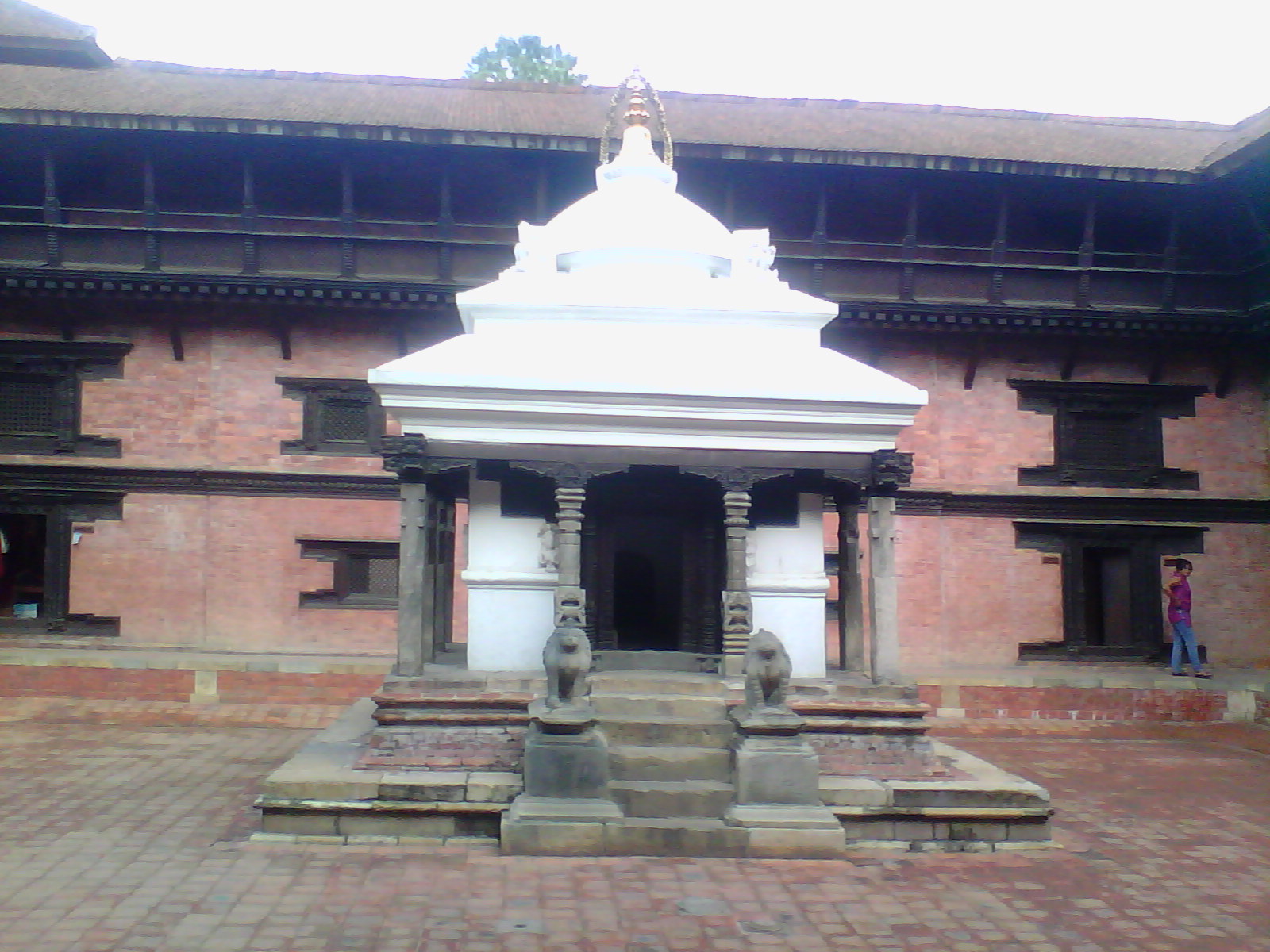
Temple Basantapur, Kathmandu

Another Temple around basantapur durbar square, Basantapur, Kathmandu

basantapur durbar square

Temple around basantapur durbar square

basantapur durbar square

basantapur durbar square

A small Temple around basantapur durbar square

Patan durbar square, Lalitpur, Nepal

Patan durbar square, Lalitpur

Patan durbar square, Lalitpur

Patan durbar square, Lalitpur

Patan durbar square, Lalitpur

Patan durbar square, Lalitpur

Patan durbar square, Lalitpur

Krishna Temple, Patan durbar square, Lalitpur

Patan durbar square, Lalitpur

Patan durbar square Museum, Lalitpur

Dhunge Dhara Patan durbar square, Lalitpur

Some of the ancient Nepali Cultural Stuffs to sell around Patan durbar square, Lalitpur

Some of the ancient Nepali Cultural Stuffs to sell around Patan durbar square, Lalitpur

Some of the ancient Nepali Cultural Stuffs and Khukuries to sell around Patan durbar square, Lalitpur

Rato Machindranath Jatra, its Nepali Culture around Valley