Tampilkan postingan dengan label Gadget Updates. Tampilkan semua postingan

Jumat, 10 Juni 2011

World’s Most Expensive Cell Phones

Most people enjoy having a quality cell phone, but they also recognize that cellular phones are a consumable good and will have to be replaced within in a few years. For this reason, people often do not purchase the most expensive cell phone when they purchase their mobile. Some, though, must have a costly mobile phone. The world’s most expensive cell phones were made to satisfy just that type of person.

Ulysse Nardin’s The Chairman – up to $49,500

The Chairman by Ulysse Nardin is the world’s most expensive Android smartphone, and includes both a touch screen and a physical number pad. The Ulysse Nardin name is most often associated with luxury watches and that fact shows in the Chairman’s sophisticated design. The volume controls look like watch buttons and the crown between them can actually be wound to generate power for the device. In fact, the phone features a kinetic rotor power system visible through the backplate.


Nokia 8800 Arte with pink diamonds - $134,000
Designed by Peter Aloisson, this solid 18k white gold phone features over 680 pink and white brilliant cut diamonds totaling over 21.5 carats. Some of the phone’s features are a 3.15 MP camera with autofocus and video, a music player, Bluetooth and voice memo.


Peter Aloisson’s iPhone Princess Plus - $176,400
The Princess Plus got its name from the Princess cut used on 138 of the 318 diamonds on its surface. The other 180 diamonds on the phone were brilliant-cut. In total, the phone has 17.75 carats of diamonds set in 18k white gold around its rim. The iPhone Princess Plus is worth $176,400 while the somewhat more pedestrian “Brilliants only” version sold for $66,150.


Sony Ericsson Black Diamond – $300,000
The price of this phone comes from actual state of the art technology instead of a bunch of shiny rocks—but that doesn’t mean it lacks visual appeal. OLED technology underneath the polycarbonate skin that covers the phones entire face gives the 4 megapixel screen a borderless look. The mirror finish gives the phone a sleek, futuristic look.


Vertu Signature Cobra - $310,000
This gaudy phone is so exclusive that only eight will ever be made. Designed by French jeweler Boucheron, the Signature Cobra is made with two diamonds, two emeralds and 439 rubies. For buyers who are only filthy rich, rather than obscenely rich, twenty-six of the less flashy (read: no rubies) Signature Python phones will be available for a mere $115,000. Both phones will feature the real draw—they have frikkin’ snakes on them. Awesome.


Gresso Luxor Las Vegas Jackpot – $1 million
This ultra-exclusive phone, limited to only three units, truly lives up to its name. Not only is it extraordinarily expensive, but its Egypt-inspired design will look right at home in the hands of a Vegas high-roller. The phone features 45.5 carats of black diamonds decorating the bezel and a back panel made from 200-year-old African blackwood—the most expensive wood in the world. As if that weren’t enough to ensure the Jackpot a place among the world’s most expensive mobile phones, each key is cut from a hand-polished sapphire crystal. All of these luxurious materials are set in a 180-gram solid gold frame.


The Diamond Crypto Smartphone – $1.3 million
Created by luxury accessory producer Peter Aloisson of Moscow-based JSC Ancort, this luxury smartphone’s price stems from the platinum body, the cover adorned with 50 diamonds—including eight that are rare blue diamonds. Additionally, the Ancort logo and the navigation key are made of 18k rose gold. Built on the Windows CE, this expensive cell also features a high-resolution color TFT display and a 256 bit cryptographic algorithm. This expensive mobile phone features SMS, MMS, E-mail and Internet capability, WAP, JAVA support and even a media player.


GoldVish ‘Le Million’ Piece Unique - $1.3 million
Guinness World Records certified GoldVish SA’s ‘Le Million’ Piece Unique on January 29th, 2008. The Geneva-based luxury communications company’s expensive mobile phone was designed by Emmanuel Gueit as an addition to the Illusion Collection. The phone is made of 18k white gold and set with 20 carats of VVS1 (only microscopically flawed) diamonds. The phone also features Bluetooth, 2 GB of storage, FM radio, a digital camera and MP3 playback. This expensive cell phone is available only by special order.


Peter Aloisson’s Kings Button iPhone - $2.4 million
The Kings Button iPhone is, surprisingly, a jewel-bedecked iPhone. This time, however, Aloisson had the iPhone 3G to play with—and, apparently, a bit of a bigger budget. One hundred and thirty-eight brilliant-cut diamonds line the sides of the phone, but the real prize is the home button—a rare 6.6 carat white diamond.


Goldstriker iPhone 3GS Supreme - $3.2 million
Stuart Hughes of Goldstriker International is known for giving luxury devices such as phones and video game consoles the “Supreme” treatment—covering them with gold and diamonds—and the iPhone is no exception. The iPhone 3GS Supreme features a casing made from 271 grams of solid 22k gold and a screen trimmed with fifty-three 1-carat diamonds. The home button is covered with a single rare 7.1-carat diamond. That’s not all, though—the iPhone 3GS Supreme comes in a chest carved from a single block of granite and sports Kashmir gold and an interior lining made with Nubuck top grain leather.

Stuart Hughes iPhone 4 Diamond Rose Edition - $8 million

If you thought his iPhone 3GS Supreme was impressive, check out the latest iPhone from Stuart Hughes–the iPhone 4 Diamond Rose Edition. Hughes has recreated the infamous antenna band that wraps around the sides of the latest iPhone, as well as the backplate, using rose gold. The band is adorned with 100 carats of flawless diamonds, and the Apple logo is formed with fifty-three more diamonds. Once again, the home button gets the most love–it’s made of platinum and features a rare 7.4-carat pink diamond.
The phone comes in an imperial pink 7-kilogram chest cut from a single block of granite and lined with nubuck top-grain leather. It also comes with an 8-carat flawless diamond that can be used in place of the pink one.

Kamis, 19 Mei 2011

Best Android Phones in the Market as of Now

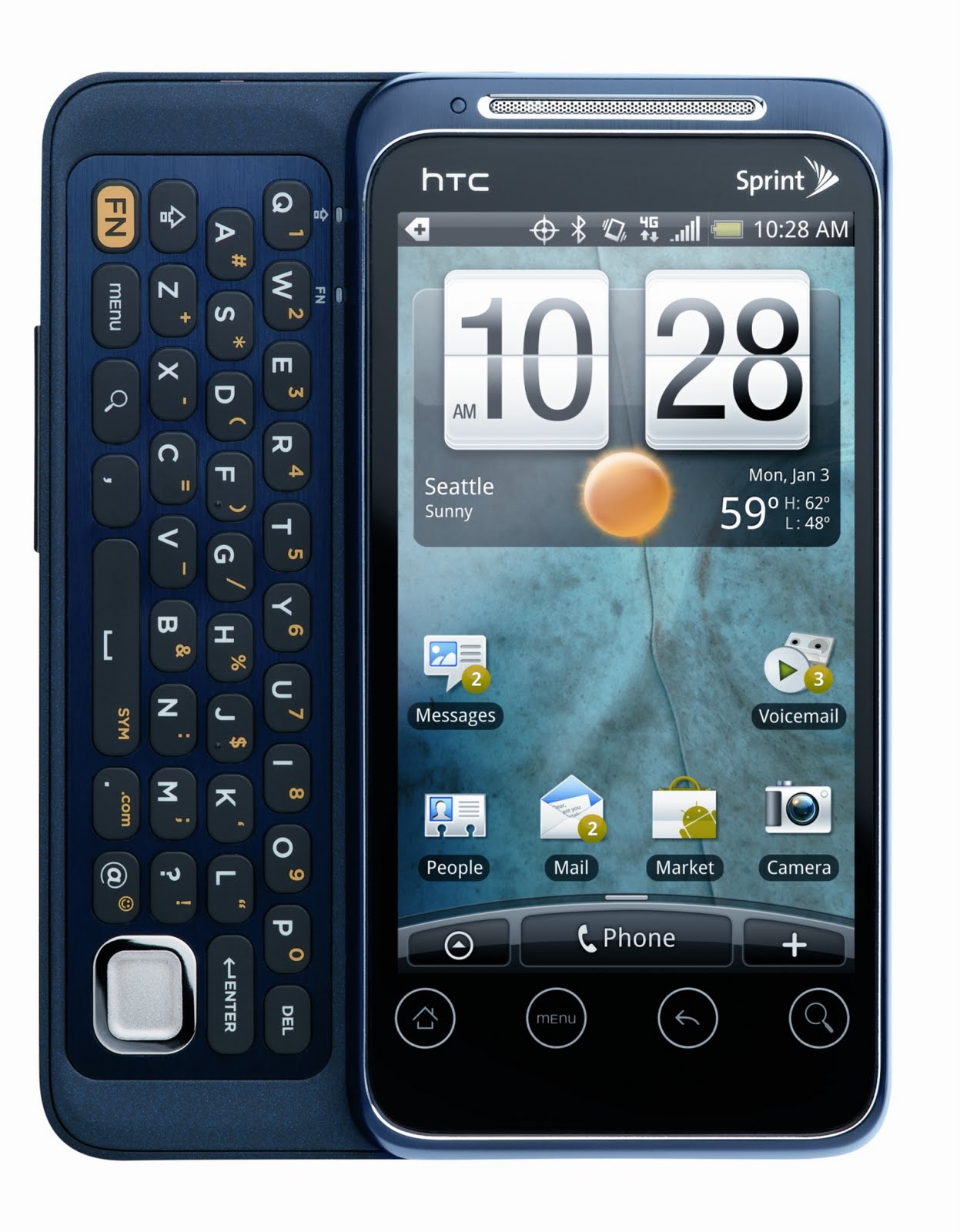
We compare five of the best Android phones on the market today, including the HTC Thunderbolt 4G, Motorola Atrix 4G, and HTC Inspire 4G.
The world of Android is fast and furious (maybe too fast and too furious). We made a Best Android handsets list six months ago, but it’s already woefully outdated. Our late 2010 picks were the Motorola Droid X, HTC EVO 4G, HTC Droid Incredible, T-Mobile G2, and Samsung Captivate. While these are all still excellent Android devices, time marches on, and so do our picks. Below are five of our favorite Android handsets currently on the market.

HTC Inspire 4G

The Inspire may not have the fancy dual-core processor that some of the newest Android phones have, but it’s a great device at a great price. We’re big fans of HTC’s Sense user interface (UI), which may be the best Android user interface on the market, especially for new users. If this is your first smartphone and you’re on AT&T, the 4.3-inch phone is a great choice. For those wondering, the Inspire 4G has 4GB of internal storage, an 800MHz TI OMAP 3610 processor, 4G HSPA+ support, and a 480 x 800 pixel display. It has a few shortcomings, however. It lacks a front-facing camera and the battery cover is oddly placed and difficult to remove. We are also still waiting for an upgrade to Android 2.3, which HTC says will come soon.


Motorola Atrix 4G

Motorola made a big splash with its series of Droid phones on Verizon, but its flagship AT&T phone has had a rough time catching on with consumers, likely because of its far-too-expensive laptop dock attachment. We’re honestly not sure what Motorola was thinking when it released the $500 peripheral with theAtrix 4G. Remove the dock from the equation though, and the Atrix 4G is one of the best phones on the market today with a 1GHz dual-core Nvidia Tegra 2 processor, 1GB of RAM, 16GB of internal storage, a 540 x 960 qHD 4.0-inch screen, 4G HSPA+ support, and a built-in biometric fingerprint reader. The only downside to the handset is that it uses the MotoBlur UI, which just doesn’t hold up well compared to the modified UI by HTC and other manufacturers.


T-Mobile G2x

The T-Mobile G2x is actually an LG Optimus phone, and shows that LG is beginning to lead the pack with its high-end Android devices. We don’t have a full review out yet, but we got the chance to spend some time with this phone at CTIA in late March and walked away highly impressed. Though it has a 1GHz dual-core processor, its specs don’t quite match up to the Atrix, but hey, it’s probably the best phone on T-Mobile right now, and fast enough to satisfy the most demanding of users. We also like that LG tends to leave Android alone, for the most part. Unlike Motorola, which seems to tamper just for the sake of tampering, the Android UI changes in LG’s newer phones are minimally invasive and seem to make sense. We can’t complain about the HDMI mirroring either. This is a device worth switching carriers for, if T-Mobile coverage is good in your area. The carrier also has some of the best data rates.


HTC ThunderBolt 4GHTC ThunderBolt 4G

If you’re willing to live on the cutting edge, the Verizon HTC ThunderBolt is a good choice for you. This is the first phone that can tap into the carrier’s next-generation 4G LTE network, which is up and running in many cities across the United States. Obviously, you’ll want to check your local coverage, but give it a spin if it’s available. There are downsides to living on the bleeding edge, however. Verizon’s 4G network has had a few hiccups and ThunderBolt users have complained of shorter-than-average battery life for the handset. Still, it could be worse, and Verizon’s network is poised to have the best actual 4G coverage for some time to come, as AT&T’s LTE network is still in early testing.


Google Nexus S 4G


Sprint’s EVO line of phones is great and we’re looking forward toSamsung’s Galaxy S II, but for now, the Google Nexus S, made by Samsung, is a great option for those who’d like a full-featured Android phone on Sprint. Co-designed by Google to deliver a pure Android experience, the Nexus S is just about the only handset currently on the market that has Android 2.3 (Gingerbread). The update adds some graphical enhancements to Android and needed upgrades to core features like battery management. Better yet, the Nexus S is equipped with Sprint WiMax 4G capabilities. While not as fast as Verizon’s LTE network, WiMax is an actual 4G technology whereas T-Mobile and AT&Ts’ HSPA+ networks are more like 3G networks on steroids. Another perk of having a Google phone is that you may actually get the next version of Android when it comes out, not six to 12 months later, as seems to be the norm these days.
Source: Yahoo Shopping

Minggu, 15 Mei 2011

Apple: Analyst Says No LTE in iPhone 5; To Add Sprint, T-Mobile

Apple‘s iPhone 5 launch in September isn’t likely to include LTE functionality, Jefferies & Co. analyst Peter Misek asserts in a research note.

“According to our industry checks, the device should be called iPhone 4S and include minor cosmetic changes, better cameras, A5 dual-core processor, and HSPA+ support,” he writes in a research note.
But he also says that “industry checks indicate Apple will likely announce Sprint, T-Mobile, and China Mobile as new carriers.”
As for LTE, he says the Qualcomm LTE chipset Apple would have used “is currently not achieving yields sufficient for inclusion in the iPhone 5.” He says Apple had hoped to have the LTE chipsets ready, but was planning a version without LTE called iPhone 4S.
On the new carriers, he says Apple will announce distribution deals with Sprint and T-Mobile in time for the holidays. He also contends that China Mobile could be added in the next 12 months.
Meanwhile, he says that demand trends indicate “significant ramps” for the iPad, but that demand for the iPhone is “flat” as “strength from the white iPhone 4 release and launches on new carriers
such as SK Telekom are offset by slowing at AT&T and Vodafone.”
Apple is down $3.77, or 1.1%, to $342.80.
Source: Forbes

Minggu, 08 Mei 2011

iphone 5 Most Wanted Features You would like to have

Here is the Rummer about iPhone before it lunches its 5th model, the kind of features that you might like to have one your iPhone
check this out!
20. Enhanced voice control

We expect that in the next generation of the iOS, Apple will continue to flesh out the voice controls for the iPhone, but there's always room for more enhancements. It would be cool to be able to compose e-mails or text messages by just using your voice, no?


19. Micro-HDMI out

In March, Apple finally announced support for full 720p or 1080i HD video output for the iPhone 4, iPod Touch 4G, and iPad 2. However, you need Apple's $39 Digital AV to send that HD video (audio) to a TV or monitor, whereas many Android-powered smartphones offer a built-in Micro-HDMI port that only requires an inexpensive $5 cable to run video to your TV.


18. Removable battery

This well-known rendering of a future iPhone dreams of a model with a removable battery. That appears to run counter to Apple's current design principles.


17. Expandable memory

Not happening, but just thought we'd ask.


 16. Biometric security

It's hardly a must-have upgrade, but it would be cool to swipe your finger--instead of enter a password--to unlock your phone. It could also be combined with NFC (near field communication technology--see next slide) for making mobile payments.
Image note: Allegedly, Apple has filed some patents related to this feature

15. NFC-enabled (near field communication technology)
Rumor has it that Apple may be working on adding near field communication technology (NFC) into the next iPhone. This is sort of a bar code replacement technology that would allow your iPhone--among other things--to act as a payment device (e-wallet) or even a car key.


14. More memory
 A lot of people were disappointed that the iPhone 4 didn't come in a 64GB version (only 16GB and 32GB). Maybe next year we'll get 64GB.


13. Improved home screen

We're still waiting for a more customizable home screen, with a real "dashboard" and a better, streamlined notifications system. Android has its widgets. iOS 5 needs something similar.


12. Video chat (FaceTime) over cellular network

Currently, on the iPhone 4, FaceTime only works over Wi-Fi (yes, there are some workarounds to get it to work over 3G, but Apple doesn't officially support it). We'd like to see an option to use it over a cellular data network, and hope it's supported when AT&T's faster 4G network ramps up in 2011.


11. Flash support

It'll be a cold day in hell when Apple allows for Flash support on the iPhone. But that doesn't mean we can't ask for it.


10. Better cloud-computing support

Setting up an Android phone is dead simple: input your Gmail username and password, and the phone will immediately start pulling your Google-based contacts, calendar, and other info. The iPhone, by contrast, is still a slave to iTunes for activation and media syncing. Whether it's a free version of Mobile Me, or an online version of iTunes powered by Apple's Lala acquisition, cloud-based iPhone syncing can't come soon enough.
Yes, there are some nice apps out there, like Dropbox, that offer "cloud" functionality, but they're not as robust as they could be.
Rumor has it that Apple will indeed be revamping its MobileMe service and perhaps adding a free cloud service along the same lines as Amazon's new Cloud Drive, which gives you 5GB of free online storage (side note: there's an Amazon Cloud Player app for Android but nothing for iPhone yet).

9. Better camera

 We certainly appreciate that Apple improved the camera in the iPhone 4 (5 megapixels; LED flash), but we've seen rumors that Sony is developing an even better 8-megapixel camera for the fifth-gen iPhone.


8. Dual-core processor

With Apple's acquisition of PA Semiconductor, it's started designing and churning out its own CPUs, including the new 1GHz A5 dual-core processor that's in the iPad 2. That same processor will almost assuredly make its way into the next iPhone. (The iPhone has an A4 processor that also runs at 1GHz, but the A4 has a single-core architecture).
It's worth mentioning that LG, Motorola, and others have already released dual-core Android phones.

7. Improved 3D graphics

The A4 CPU has a Imagination PowerVR graphics chip integrated into it. Like the iPhone 3GS, the iPhone 4 uses a PowerVR SGX535 chip. But the iPhone 5 will presumably get the PowerVR SGX543MP found in the iPad 2.
For those who keep track of this sort of stuff, a PowerVR SGX545 was also announced last year.

6. More carriers

Now that the CDMA version of the iPhone has finally come to Verizon, it wouldn't be too hard to make a Sprint version. Or how about a T-Mobile iPhone?
Alas, we don't know whether Verizon's worked in any sort of exclusivity agreement into its deal with Apple, but let the rumors begin...


5. Larger screen

Rumors continue to surface that Apple will be expanding the size of its iPhone screen to compete with the larger screens on Android smartphones.
From our polling on CNET, we've found that a clear majority of our readers want a larger screen. However, they don't want the iPhone to get any bigger or lose any battery life.
We're hoping Apple can come up with the right balance, but as you can see from this mock-up, going to 4 inches makes a significant difference and is probably the optimal size for a smartphone screen.


4. Better battery life

Every time Apple puts out a new iPhone, the battery life gets better, so we expect no less from the fifth-generation iPhone. Apple says the iPhone 4 has 40 percent more talk time than the iPhone 3GS. So, if the past is any indicator, we might see similar gains in next year's model.


3. Fewer failed and dropped calls

AT&T has always had problems with its iPhone service in big cities like San Francisco and New York, where AT&T complaints seem to run highest.
Some have questioned whether it's the phone or the carrier, but either way, it will be interesting to see how Verizon's network handles the influx of iPhone users. It's also possible that the migration of some AT&T iPhone customers to Verizon will bring relief to AT&T's network and perhaps its service will improve. Let's hope so.

2. iOS 5

2. What new features will iOS 5 bring? Who knows, but we look forward to its arrival.


1. 4G network compatible


The one big thing missing from the iPhone 4 is the lack of next-gen 4G data network support, which is probably why Apple called it the 4 instead of the 4G.
AT&T will reportedly have a 4G network up and running in 2011, whereas Sprint has already rolled out its next-gen network. Verizon has also deployed its 4G network, which currently works with one phone, the HTC Thunderbolt (the data speeds are impressive). However, the Verizon iPhone 4 doesn't support 4G data.
Many don't believe Apple will include "true" 4G data support in the next iPhone 5, mainly because using 4G data networks are taxing on battery life. However, if Apple decides to delay the iPhone 5's launch date until the fall, the odds increase that it will make the iPhone 5 a true 4G phone.


Source: Cnet Reviews