Tampilkan postingan dengan label Auto. Tampilkan semua postingan

Sabtu, 28 Mei 2011

Race Car Drivers' Everyday Cars

 Racers’ Personal Rides
No one likes to take their work home, but race car drivers might be an exception. From Talladega to Monaco, the world’s best-compensated drivers tend to fill their garages with collections of prized automobiles. In the slides ahead, you’ll discover which pro driver can’t drive 45 in a Mercedes SUV (and got ticketed and a trip to driving school), and which famed racer has a thing for vintage Camaros, including the 1967 model pictured here. 
But whether these famously fast drivers are affiliated with NASCAR or Formula One, their everyday rides are not always flashy and pimped. Sometimes they’re downright practical vehicles suitable for driving the kids to school, and one or two of them might even get good gas mileage. 
The following collection runs the gamut, containing not just speedy supercars, but a healthy dose of vintage classic cars, and one distinctive off the wall novelty vehicle. Click on to discover which pro drivers make fantastical car choices, which ones are practical, and whose selections represent a little of both categories. 


Danica Patrick
Known personal vehicles: Lamborghini Gallardo, Mercedes ML 63 AMG 
The first woman to win an Indy car race and NASCAR star Danica Patrick is known to indulge her need for speed off the racetrack in a Lamborghini Gallardo and Mercedes ML 63 AMG. While driving her Mercedes in her hometown of Scottsdale, Arizona, she picked up a speeding ticket for doing 57 in a 40 zone, along with an order to attend traffic school. 
Patrick told the Daily News about her attempt to evade the long arm of the law. “I tried to pull the race car driver card, and I know he had already written the ticket, but I said, ‘I'm a race car driver. I'm not going to hurt anyone out here, I do know what I'm doing,’ and he said, ‘I don't know who you are and I don't care.’ But then it was on the news that night.”

Sebastian Vettel
Known personal vehicles: Infiniti FX50 
At 23, German Formula One world champion Sebastian Vettel is the youngest driver to earn the title. His driving associates include Julia and Kate, Kate’s Dirty Sister, Luscious Liz, Randy Mandy, and Kinky Kylie—all names of his cars. 
Off-track, Vettel says he loves driving so much that he’ll drive anything. He told The Times, “I drive the cars that I like — I’m not a car snob. So if I like a Skoda, then I drive a Skoda. But actually I am ambassador for BMW, so I drive BMWs.” On a perhaps related note, Vettel drives an Infiniti FX50 as his personal vehicle, and Infiniti has a partnership with Sebastian’s Red Bull Racing Team.

Jenson Button
Known personal vehicles: Mercedes-Benz C63 AMG DR 520, 1970 VW Type 2 camper, 1978 Ferrari 512BB 
British Formula One driver and 2009 World Drivers’ Champion Jenson Button has come many laps since failing his first drivers’ test for getting too close to another car when parking. For personal rides, Button’s been linked toPorshe Carerra GT, Ferarri Enzo, Bugatti Veyron, and a matte black Mercedes-Benz C63 AMG DR 520—one of only 20. 
He famously auctioned a much less streamlined and speedy personal vehicle, his 1970 VW camper with split windscreen. Another curious car of Jenson Button recently went up for auction: a 1978 Ferrarri 512BB. Why would he part with this sleek beauty? It was an act of kindness performed for the Ferrari’s next owner: “My F1 commitments will not enable me to enjoy the car to its fullest,” he announced when putting it up for auction.

Lewis Hamilton
Known personal vehicles: Mercedes-Benz GL Class 320 CDI 
Formula One driver Lewis Hamilton’s Mercedes SUV—his second GL—is a seven-seater with a refined three-liter V6 common rail diesel engine, interior leather to match the black painted exterior, privacy glass, and 21” AMG wheels. 
The GL has a 0 to 62mph time of 9.5 sec and a top speed of just 130 MPH, but F1SA.com  quoted Lewis praising his wheels as the most comfortable road car he’s ever driven, saying he likes using it “to relax, kick back and cruise.” He also appreciates the space it allows for his kit and its sound system.

Michael Schumacher
Known personal vehicles: Ferrari FXX, Original Fiat 500, Fiat Croma 
German F1 seven-time World Champion Michael Schumacher is an old pro now, but when he was a new driver, his first car was an original Fiat 500. He’s still very much associated with the Fiat brand, reporting on Top Gear that he drives a Fiat 500 Abarth and that his family car is a Fiat Croma. There are also two Michael Schumacher limited edition Fiat models: the (rather un-racy looking) Fiat Stilo Michael Schumacher GP and Fiat Seicento Michael Schumacher. 
Oh, and Schumie also tools around in a little jalopy known as the Ferrari FXX supercar (like the one pictured here)—one of just 31 produced, and it’s the only black FXX.

Tony Stewart
Known personal vehicles: 1984 Cadillac hearse, numerous other vehicles 
Indy and NASCAR driver Tony Stewart has drawn a lot of attention for one particular off-track auto choice: the 1984 Cadillac hearse he named Smoke DeVille. 
But there are plenty of other cars in Stewart’s personal garage. In a 2009 video tour of his auto collection, Tony points out a 2005 Lamborghini Murcielago he says he only drove once, a 2003 Hummer equipped with an incredible seven TVs “for going out with your buddies,” a 1956 Chevy short bed pickup, a 1957 Chevy Belair, a Corvette pace car, a Shelby Series 1, a Tony Stewart Monte Carlo,  a 1967 Pontiac GTO, a 1955 Chevy Nomad, and his  favorite: a 1979 Pontiac Trans Am Firebird, Smokey and the Bandit edition with CB radio.

Dale Earnhardt Jr.
Known personal vehicles: 1967 Camaro, 1972 Camaro 
NASCAR’s Dale Earnhardt is a third-generation race car driver in a racing family. Outside the track, he’s also a long-established Camaro guy, owning a few generations of Camaros, including the special edition Dale Earnhardt, Sr. "Intimidator SS" Camaro. 
Indeed, Camaros are an Earnhardt family affair: Dale, Sr. built a racing Camaro with his dad in 1967. Dale Jr.’s 1967 Camaro (pictured on the introductory slide to this slideshow) has an SBC engine and 5-speed transmission, and the 1972 one pictured here has a GM LS2 engine and a 6-speed Transmission.

David Coulthard
Known personal vehicles: 1971 Mercedes-Benz 280SE, Smart Car 
When he’s not racing, the Scottish Formula One driver / hotelier/ reputed ladies’ man David Coulthard likes to tool around Monaco in his 1971 Mercedes-Benz 280SE convertible (like the stunner depicted here, which is for sale ). 
The Scottish edition of The Sun reports that the thrifty DC also drives a Smart Car, explaining, "Believe it or not I was never really a speed freak. I don’t drive fast on the roads — well, you can’t really in my car.”


Jeff Gordon
Known personal vehicles: Chevy Tahoe Hybrid 
Four-time NASCAR Cup Series champion and three-time Daytona 500 winner Jeff Gordon drives a Tahoe hybrid SUV in his daily life. One fan site lists Flash Gordon’s other personal rides as Blazer, Jaguar XK-8, and 1934 Ford. 
There is also a Chevrolet dealership bearing Gordon’s name and likeness in Wilmington, NC.


Mark Webber

Known personal vehicles: Porsche 911 GT2 RS, Infiniti M37 
Aussie Formula One driver Mark Webber is the owner of one of only 500 Porsche 911 GT2 RS, (like the one pictured here, but in black). In avideo depicting Mark taking some lucky fans for a spin, Mark discusses his vehicle. 
“It still feels like a little bit of a race car, it’s a bit naughty, but you can still drive on the road so they got the balance really right.” Webber admits that road cars are not his thing, but he was looking at road cars with Sebastian Vettel, “to be honest but it was a no brainer…I’m definitely not going to be parting with this one…I love it.”

Minggu, 15 Mei 2011

5 Ways 'Fast and The Furious' Changed Cars


Fast Five, the latest installment of The Fast and The Furious film franchise, isn't just a statement on American car culture, but a reminder of why your Ford Fiesta is available in "Lime Squeeze Metallic" paint.


A tribute to all the gearheads and tuners who make 1995 Toyota (TM) Supras that can dust Ferraris, The Fast and The Furious films were ubiquitous enough to soak their way into nearly every aspect of American auto culture. The namesake first film made $207 million worldwide when it was released in June 2001; follow-up 2 Fast 2 Furious topped that with $236 million in 2003; and the most recent installment, Fast & Furious, outdid them both with a $359 million take in 2009. Even the weakest film in the series, the 2006 Vin Diesel- and Paul Walker-devoid The Fast and The Furious: Tokyo Drift nearly quadrupled its $40 million budget with $158 million in box office revenues.

It's a lot easier to get fired up about turning a 1995 Honda (HMC) Civic into a big-horsepower beast on a double wishbone suspension when gas prices average $1.53 a gallon, as they did the week the first Fast and the Furious film hit theaters. With average gas prices at $3.88 per gallon and rising as the latest installment hits theaters Friday, furious drivers are somewhat less fast to fork over the cash and play street racer during the morning commute. Auto sales were up 17% last month, but the race for more fuel-efficiency left gas-guzzling performance cars in the dust.

Even if you're crammed into a 35-mile-per-gallon compact, however, there are still Fast and The Furious flourishes all over your automobile. Though they may not all encourage Jordana Brewster, Eva Mendez or Ludacris to hop in your ride, The Street found five ways The Fast and The Furious changed your car forever:

1. Customization 

Would Toyota have introduced its highly customizable Scion marque in 2003 even if The Fast and The Furious weren’t released two years earlier? Probably.

Do Scion and competitors such as Kia that offer 150 different accessories for car buyers to choose from owe just a little something to The Fast and The Furious and the custom car culture that produced it? Absolutely. There's a reason the Scion's first models were introduced in California and Kia's Soul was conceived there, and it's the same reason The Fast and The Furious thrived in its West Coast surroundings. The custom scene there is well-established, and it and the California-based Special Equipment Market Association have been giving drivers choices big automakers hadn't in a long time.

"The tuner scene and custom scene is influential," says Angus Mackenzie, editor-in-chief of Motor Trend magazine. "I know car designers who go to SEMA shows to see if there are new colors or new trends to pick up on."
Those trends can add up to big money when offered a la carte, and automakers were quick to catch on. When BMW introduced the U.S. market to the Mini back in 2002, it provided a combination of colors and options that MacKenzie said made the average Mini buyer put roughly $4,000 worth of options into their car. That price tag gets a little larger when the car you're tuning up in the showroom is a Porsche 911, which has options such as gold crests on the wheels that drive buyers to spend $8,000 to $10,000 on options alone.

"The trend toward mass customization had been talked about in the industry for a long time, and there were a lot of very big proponents of it," Mackenzie says. "It's what Detroit used to do in the 1960s before it lost its way."

2. Big horsepower, small packages 
In a country raised on big, muscly Barracudas, Trans-Ams and Grand Nationals, the sight of a nitro-fueled 1995 Mitsubishi Eclipse on the line in a high-stakes street race may have been a bit much for the automotive old guard to stomach. Ten years later, when a Mini Cooper Clubman S gets 181 horsepower and a Subaru WRX STi gets a Mustang-like 305 horsepower, the idea of a small car putting on a big show isn't so foreign.

"If you look at the market right now, it's a golden age for horsepower and performance," Mackenzie says. "There are more cars available on the market with 400 horsepower or more than at any time in history."

According to the Environmental Protection Agency, the average horsepower for cars in the U.S. in 1998 was 171. Back then, it took that field an average 10.9 seconds to get from zero to 60 miles per hour and only 1.4% of cars had a turbocharger there to help. Last year, average horsepower surged to 220 and 0-to-60 times averaged out to 9.5 seconds -- and 3.2% of vehicles are now turbocharged.

Instead of letting the little guys lap them, though, the U.S. automakers brought bigger, beefier performance cars to the starting line. GM (GM) just unveiled a 550-horsepower Camaro and even GM's Cadillacs are getting brawnier, with the CTS-V sporting 556 horsepower. The difference is that they're doing it more efficiently, with the 305-horsepower Mustang also getting 31 miles per gallon. None of that was even imaginable among American automakers in 2001.

"American performance was a contradiction in terms," Mackenzie says. "You now have the Camaro, Mustang, Charger, Challenger and the Cadillac CTS-V with a manual transmission that are genuine, authentic American muscle cars with a level of performance that guys back in the alleged golden era of the '60s and '70s could never have even dreamed about."

3. A broader paint palette 
There's a reason why even Ford's compact Fiesta and Hyundai's upcoming Veloster sports coupe look like Walker's lime Eclipse from the first film: Factory paint before The Fast and The Furious was pitiful.

"Manufacturing's gotten more flexible in terms of allowing people to do paint and trim options together," Mackenzie says. "Toyota drove the industry to a standardized mouse-gray interior because it was cheap and easy to do, but now Chevy has a new Malibu with a dark color pattern in a black or in a brown because customers are bored with gray."

Ford's palette for the Fiesta's exterior has nine colors, and even that seems a bit conservative. Automakers such as Audi are known for offering European customers a color-wheel's worth of choices for their rides. Struggling, once-bankrupted U.S. automakers are playing catch-up and making street-worthy colors and tricked-out trim a key portion of their sales pitch.

Chrysler's 300 C has a performance version where black chrome wheels are an option, as is a satin finish instead of chrome and two-tone leather. Chrysler's Fiat 500 has 14 exterior colors and 12 different interior color patterns, which Mackenzie says can add up to 500,000 different variations based on colors and options.

"If you went to a SEMA show four or five years ago, matte-finish paints were on all the cars -- matte black, matte orange and that sort of thing," Mackenzie says. "Now the industry's picked up these paints, so you can have a Lamborghini in matte white or a Mercedes-Benz in a color called alubeam, which is a matte silver that makes the car look like it's made out of metal."

4. Interior tech 
Even though their interior LEDs may not be linked to tachometers or nitrous tank gauges, car buyers' center consoles are doing just as much multitasking as those installed in The Fast and the Furious street racers.

From Ford's Microsoft (MSFT)-powered Sync entertainment system linking audio, GPS and Bluetooth to the Toyota Enform Safety system installed in its Lexus luxury brand, the all-in-one center console allows the average commuter to feel in touch with their ride without breaking any local traffic laws. For automakers such as Toyota, Honda, Volkswagen and others that like to restrict their racing personae to the big driving circuits and keep their consumer products as sensible as possible, it's a way to perform for buyers without giving them too much performance.

"I think the Japanese companies really struggle with brand, and both Toyota and Honda perceive themselves a certain way," Mackenzie says. "They've played around with performance cars, but they've always backed away."

5. Vin Diesel wannabes 

When The Fast and the Furious was released in 2001, sales for compact-performance products totaled $2.86 billion, according to SEMA. A year later, sales jumped to $3 billion.

Mackenzie says hardcore gearheads have roundly ignored the films or see them as strictly entertainment, which means that surge came mostly from newbies who may have opened their car's hood a time or two to check the oil.

Unfortunately, much of that enthusiasm failed to trickle down through the sequels with any consistency. While performance parts companies such as Turbonetics saw enough of a bump from the films to invest in being featured in the sequels -- Turbonetics was in Fast & Furious, its logo featured on the front of Walker's Nissan Skyline -- Mackenzie doubts the franchise has converted any corporate drones into full-time tuners.

"The Fast and the Furious franchise is philosophically not a lot different from the hot rod movies of the early '60s," Mackenzie say. "They're picking on a cultural phenomenon or a subculture, as it were, and whether that inspired anyone new to go out and customize a car ... probably not."
-- Written by Jason Notte in Boston
Source: TheStreet 

Kamis, 12 Mei 2011

Top 10 Coolest Small Cars

Microcars for City Drivers - Top 10 Coolest Small Cars:
Not so long ago, boat-sized cars cruised the motorways of this wide-open country. If you wanted to see a tiny car, you’d have to go to Europe or watch a Mentos ad (which looked suspiciously like they were shot in Europe). But with the continuing interest in fuel efficiency and smaller carbon footprints, microcars have grown more common, with new compact concept cars springing up at every auto show. 
While of fuel economy and environmental concerns provide much of the motivation for buying a small car, John Filiss ofSeriousWheels.com counts off some other motivations. “Very small cars can be quite endearing in appearance, and there are microcar clubs around the world for people who collect old Isettas, Messerschmidts, and other very tiny cars from yesteryear. Another aspect is that smaller cars are regarded by many as being more fun to drive. 


"Of all the small car manufacturers today, MINI has probably succeeded the most brilliantly at making this a big part of their marketing. A small go-cart has a more visceral feel than a full-size car, including sports cars that may have better performance figures, and that same quality is definitely evident in smaller cars versus their larger counterparts.So long as you don’t have an intimidation factor of being surrounded by much larger vehicles, tiny cars are also easier to drive… traffic lanes always have plenty of width, you can turn on a dime, and almost any parking space will do.” 


One concern that always rises when considering tiny cars is safety in the event of collision. This can vary greatly from vehicle to vehicle. “Manufacturers like Mini and smart have put a great deal of effort into making their cars as safe as possible,” says Filiss. “There are some basic physics that work against small cars in a collision that are hard to completely overcome, though. A large car will usually fare much better in a collision than a small car. On the other side of the equation, though, small cars generally have better braking, better handling, and better maneuverability than larger vehicles.   So, your ability to avoid an accident entirely tends to be better in a smaller vehicle.” 


Commuter Cars Tango 600


Cost: $108,000 

The Tango 600 is a high-performance electric car that can reach speeds exceeding 130 MPH with a racecar safety roll cage. Batteries and drivetrain are not included with the T600, but the car is also available as the mass-produced T200 at a lower price. Depending on the user’s battery selection and driving style, it can get 40 to 200 miles of freeway driving, and will recharge up to 80% from standard outlets in 10 minutes. A full charge takes under 3 hours. 

Its size provides many advantages for navigating a crowding planet. It’s five inches narrower than some motorcycles, which allows it to zip through stopped traffic by lane splitting, or riding between cars that are slowed or stopped in heavy traffic. (This practice is legal in many places internationally, and it’s tolerated when motorcycle riders do it safely in Calfornia.) It can be parked perpendicular to the curb like a motorcycle, allowing up to four such cars in one spot, and it allows two Tangos to drive with ample clearance in a regular traffic lane.


Myers Motors Duo

Cost: Under $30,000 

The limited-run three-wheel, two-passenger 2011 DUO promises 300 miles of driving using $6 of electricity, rather than $50 of gas. DUO stands for “doesn’t use oil” and adds an extra passenger capacity to Myers Motors’ original NmG (“no more gas”) electric vehicles. The charge can handle a daily 60-mile range, with an option for a 100-mile range for drivers with longer commutes. And it fits in a motorcycle parking space.

Smart ForSpeed Concept
Cost: $10,990-$17,690+ (Fortwo) 

The most commonly sighted micro-sized city car (at least in the vicinity of CNBC HQ), the basic smart Fortwo comes in gas-powered models and is also available for lease with an electric drive. But far more exciting, at least in the prototype’s looks, is the electric car concept revealed at the Geneva Motor Show, the “speedster” version of the smart car, capable of speeds up to 75 with a range of 85 miles. 

With a convertible roof, and wind deflectors (rather than windshield) with integrated solar cells, and iPhone dock for the passenger seat, many are hoping it will join the fortwo on the market soon.

Toyota iQ
Cost: Under $20,000 

The world’s smallest four-seat urban car (about 66 inches wide and 117 inches long) has buzzed throughout Europe and Japan but was not available in the U.S. That was supposed to change with this year’s planned arrival of the Scion iQ—although that’s been delayed indefinitely because of quake-related parts shortages. 

When the Scion does emerge, it will feature 11 airbags, including in the back to protect from a rear-end collision. That back area has two seats that fold down to create a modest cargo area—enough to stow a bag of golf clubs or a medium-sized haul of groceries.

Aston Martin Cygnet
Cost: $50,000 

This low-emissions city car is based on the Toyota iQ, but with Aston Martin luxury, craftsmanship—and as the auto publications noted in tones ranging from scandal to scoff, an Aston Martin price tag as well. Like the iQ, this “bespoke luxury commuter car” can seat up to four, and it’s the same length, but the Cygnet has leather seats and numerous features are customizable.

Rolls-Royce MINI
Cost: $68,000 

The original Mini was built by the British Motor Corporation from 1959 until 2000, Filiss says, and the original was much smaller than the current model. After BMW bought the company in 1994, the current model emerged in 2001, with a Mini Cooper II redesign starting in 2006. Another new twist on this classic debuted at the Shanghai Auto Show: a limited edition Rolls Royce-inspired MINI. The three-door hatchback will perform like the MINI S with an estimated 30 miles to the gallon, but its leather, lambswool, and walnut burr interiors and spoked alloy hubcaps evoke the Rolls.

Alfa Romeo MiTo
Cost: $ 23,000+ 

Alfa Romeo is returning to the United States, but Filiss says “there are frankly a lot of questions regarding which models will be available when it happens and the dust finally settles.” What is known about the MiTo available in Europe is it has a new Stop and Start system that reduces fuel consumption and C02 emissions, an integrated navigation device with a car menu of information, and available Bose sound system.

Ford Ka
Cost: $14,000+ 

The newly redesigned Ford Ka, while not yet sold in the American market, is noteworthy in Europe as a lower cost, smaller take on the Fiesta with a distinctive “smiling face” design. This Ka offers low carbon emissions, sustainable/ reusable parts such as noise insulation made from recycled denim and upholstery, automatic parking sensors to prevent scrapes and dents, and other features in a zippy, customizable compact package.

Tata Pixel
Cost: $TBA 

This car concept capable of seating four adults from Indian manufacturer Tata might look like a futuristic golf cart, and for now it is still a figment of the future—the expected release year for Europe is 2013. At its Geneva Motor Show debut, it drew praise for its city-friendly features like outstanding maneuverability and the “scissor” gull-wing doors designed to rotate upwards for getting in and out after parking in the smallest of spots.

Volkswagen XL1

Cost: $TBA 

The ultra-sleekly designed XL1 is Volkswagen’s diesel plug-in electric hybrid vehicle. “While this car is only a concept, it is interesting on several counts. One is its extreme efficiency: it achieves an amazing 261 MPG,” says Filiss. “Another thing intriguing about this design is that it is a third generation concept, with earlier 1 liter car concepts going back to 2002 and 2009. Volkswagen is clearly very interested in this ultra-efficient design, and there may be a production model based on this theme in the coming decade.”


Source: CNBC

Kamis, 05 Mei 2011

Best looking sports car on the Market


Top Best Looking Sports Car available on the Market nowadays are below:
You’re shopping sports cars because you’re a driving enthusiast. It’s all about the speed, form is following function, and you don’t care how you look because you’ll be going so fast no one will be able to see the car anyway.
Yeah, right.

Part of the appeal of any sports car is how it looks. Driving a sports car says a lot about you, and what’s said is communicated through the car’s design. All about raw power? Go for a muscle car. Into classic designs? Look for something with a rich design heritage. Like to attack curves? Go for something with sleek aggressive looks. And if you really are all about form following function, go for a sports car that’s designed with the fastest possible track times in mind.
Even if you don’t care what your sports car looks like, odds are it will look good. Sports cars are where car companies show off the best of what their designers can do. And even cars that place performance over design tend to be stylish. These cars tend to have expressive creases in their sheet metal, aerodynamic shapes and aggressively arched wheel wells. Luckily, all of those design cues help improve a sports car’s performance.
While it’s tempting to think that all sports cars look the same, there’s actually a fair amount of variation. Although there are certain design features that help make a sports car a sports car, within the class there are several distinct styling trends. That means that even if a car’s looks aren’t as important to you as its performance, it’s easy to find a sports car that’s as stylish as it is powerful.
Best-Looking Classic Sports Cars
2011 Mazda MX-5 Miata

 Some sports cars’ designs haven’t changed much from when they were first introduced. It’s not that the designers are lazy; if something works, you don’t change it. The Mazda MX-5 Miata’s classic looks have helped make it the best-selling sports car of all time. And while there have been a few changes since it hit the market -- including a retractable hardtop and the loss of headlights that rise out of the car’s hood -- the current MX-5 Miata is instantly recognizable as a close relative of the first. A better-known classic sports car design is the Porsche 911 Carrera. Not only does the current model follow the iconic shape of the original 911 (though the current model is technically the 997), but its rounded headlights and rear end hark back to the original Porsche 356. The Nissan 370z is a newer model, but takes much of its design from classic Z cars of the 1970’s -- back when Nissan was Datsun.
2011 Porsche 911 Carrera

Best-Looking Modern Sports Cars
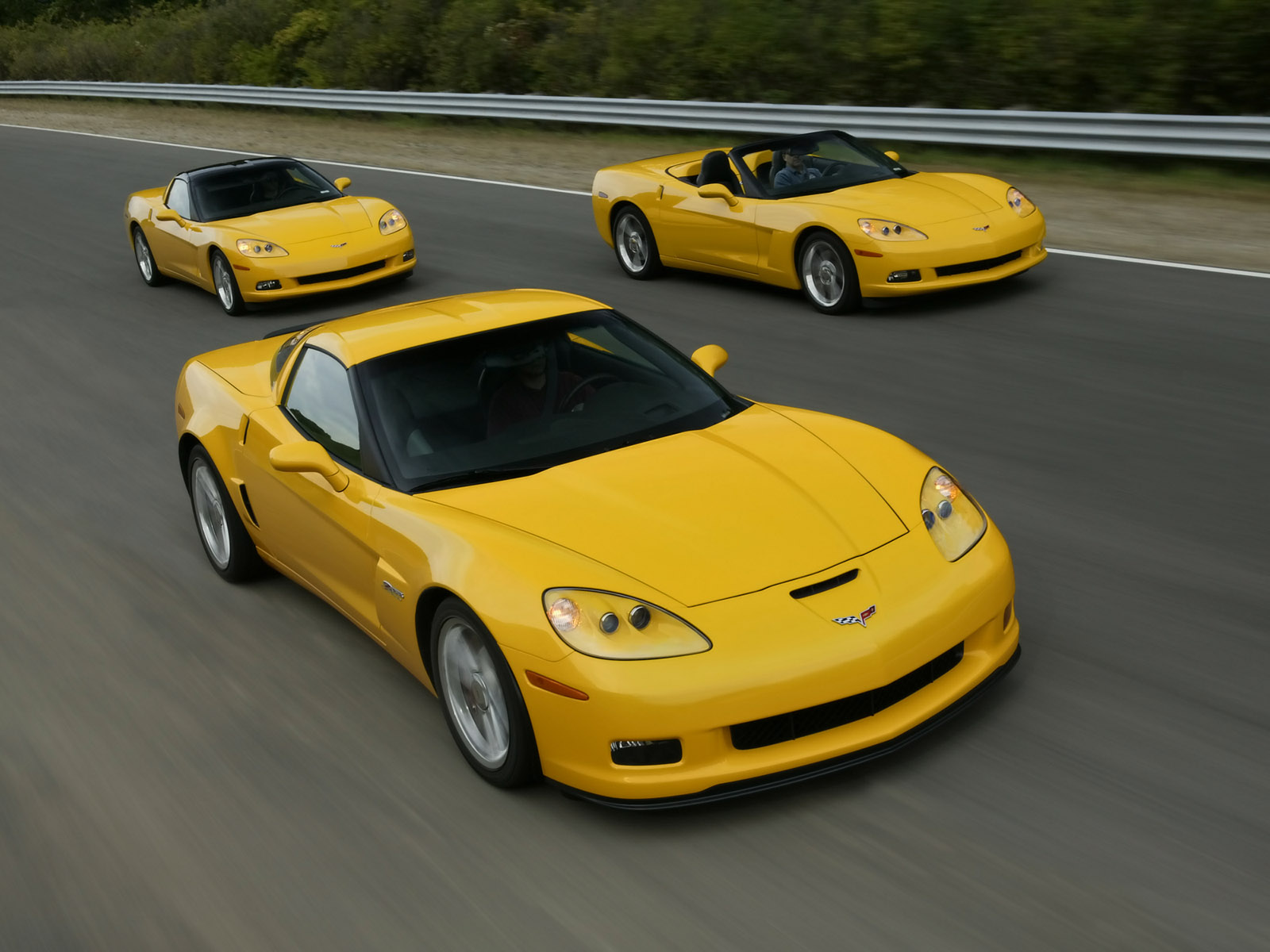
2011 Chevrolet Corvette

2011 Chevrolet Corvette

Just as classic sports cars use their designs to announce their heritage, modern-looking sports cars use their style to show off the sophisticated technology under the hood and the thoroughly modern performance they turn in. The Chevrolet Corvette is a storied model, but the current generation with its sharply chiseled lines looks more like a stealth bomber than the original Corvette. The Nissan GT-R is one of the most technologically advanced sports cars you can buy, and it looks like it.  The Audi R8 looks so futuristic that it’s been used in movies, like I, Robot, which take place in the future.
2011 Audi R8

Best-Looking Muscle Cars
2012 Ford Mustang

2011 Chevrolet Camaro
Many of today’s muscle cars could also be considered classic sports car designs because they use retro design cues that draw from the classic muscle cars of the 1960s and 1970s. But they also differ from classic sports cars in one key way:  muscle cars look mean. While classic sports cars typically have rounded edges, muscle cars have squared-off corners and angles. That’s because muscle cars are about all-out power, not handling. The Ford MustangChevrolet Camaro and Dodge Charger are all modern takes on classic muscle-car designs. That means that they’re bigger than your typical sports car, with sedan-like stances and profiles. For buyers, that means getting more attention (as well as a roomier interior) and the ability to show off at the drag strip.  The Charger, though it has an iconic name, has a completely revamped muscle-car design, with four doors 
and an aggressive front end that’s about as in-your-face as a car design can be.

2011 Dodge Charger

Best-Looking Convertibles
2011 Porsche Boxster
Enzo Ferrari famously said that convertibles were just for playboys, but when you’re zipping down the road with the wind in your hair and jealous looks from other drivers, it’s easy to tell Enzo to stuff it. Convertibles have always been synonymous with sports cars, and some of the most attractive sports car designs are drop tops. Almost every good-looking sports car has a convertible version -- even muscle cars do.  And taking the top off is a sure-fire way to make a great car design look even better. Stand-alone convertible models are also plenty stylish. The Porsche Boxster may be one of the least expensive Porsches you can buy, but it’s also one of the best-looking. The BMW Z4, with its retractable hardtop, goes from an aggressive coupe to a sleek roadster at the touch of a button. Finally, the Mercedes Benz SLK combines the aggressive looks of a performance car with the sleek, upscale style of a luxury convertible.

2011 BMW Z4

Best-Looking Track Cars
2011 Lotus Elise

If you’re more concerned with whipping around the track than you are cruising the strip, you’ll want a sports car that puts function over fashion. Luckily, those cars tend to look pretty good just the same.  The Lotus Elise and Exige aren’t practical from a day-to-day standpoint, lacking standard features like air conditioning and a radio. Plus, they’re low to the ground with high door sills, which make getting in and out an exercise in gymnastics. That aside, these two cars look like nothing else on the road. Their sheet metal is sculpted to reduce wind resistance and improve downforce. The result is two cars that look like space-age robots. The same is true for the Lamborghini Aventador. It has a wedge shape that lets it slice through the air. While it looks good, the Aventador’s styling lets everyone know that the car is all about the business of speed.
2010 Lamborghini Murcielago
Source & Read More: Auto Yahoo