Tampilkan postingan dengan label Beautiful Natural Places. Tampilkan semua postingan

Minggu, 12 Juni 2011

Most Famous Places to visit in Kathmandu, Nepal

Take a Look at some of the Most Famous Places to visit in Kathmandu, Nepal:
Basantapur Palace, Basantapur, Kathmandu


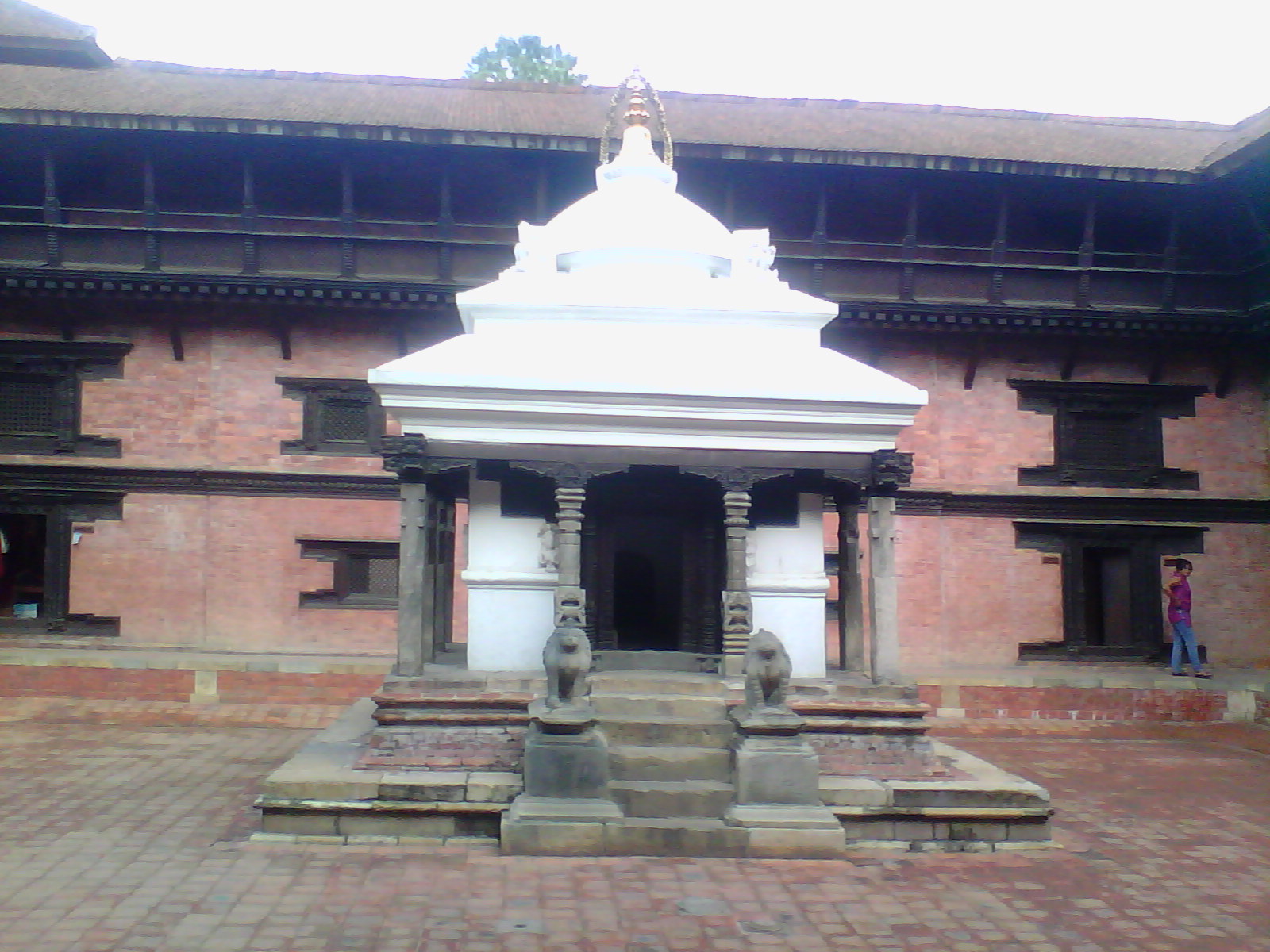
Newari Temple, Basantapur, Kathmandu

Temple Basantapur, Kathmandu

Another Temple around basantapur durbar square, Basantapur, Kathmandu

basantapur durbar square

Temple around basantapur durbar square

basantapur durbar square

basantapur durbar square

A small Temple around basantapur durbar square

Patan durbar square, Lalitpur, Nepal

Patan durbar square, Lalitpur

Patan durbar square, Lalitpur

Patan durbar square, Lalitpur

Patan durbar square, Lalitpur

Patan durbar square, Lalitpur

Patan durbar square, Lalitpur

Krishna Temple, Patan durbar square, Lalitpur

Patan durbar square, Lalitpur

Patan durbar square Museum, Lalitpur

Dhunge Dhara Patan durbar square, Lalitpur

Some of the ancient Nepali Cultural Stuffs to sell around Patan durbar square, Lalitpur

Some of the ancient Nepali Cultural Stuffs to sell around Patan durbar square, Lalitpur

Some of the ancient Nepali Cultural Stuffs and Khukuries to sell around Patan durbar square, Lalitpur

Rato Machindranath Jatra, its Nepali Culture around Valley

Jumat, 03 Juni 2011

Interesting Facts about Top 10 things to do in Patagonia

Cerro Torre Los Glaciares National Park Patagonia Argentina
Coastal treasures, ancient forests, dazzling glaciers and incredible wildlife – Patagonia has captured your imagination, but where do you start? We have cherrypicked a few Patagonian delights from the latest Lonely Planet Argentina guidebook to get you started:

1. Whale-watch in Puerto Madryn

Patagonia offers some of the world's best whale-watching and Puerto Madryn is the place to glimpse them. The warm,  enclosed waters along the Golfo Nuevo, Golfo San José and the coastline near Caleta Valdés are prime breeding zones for southern right whales between June and mid-December. A standard whale-watching trip lasts an hour and a half, but longer excursions are available too.

2. Outdoor adventures in El Chaltén
El Chaltén's surrounding mountains are prime hiking, rock climbing and horseback riding territory so if you are into outdoor adventure, this is the spot for you. Think mountain traverses, mountain ascents and rock-climbing classes. You can go horse-riding to the pretty valley of Río de las Vueltas or take a more challenging ride up the Vizcacha hill followed by a barbecue on a traditional ranch. There are also ice-climbing courses and ice treks available.

Perito Moreno Glacier Patagonia Argentina
3. Dinosaur discovery at the Palaeontology Museum

Showcasing the most important fossil finds in Patagonia, this natural-history museum offers outstanding life-sized dinosaur exhibits and more than 1,700 fossil remains of plant and marine life. The three-hour guided visits are a walk through time, along a well-designed nature trail past a wealth of exposed fossils dating as far back as the Tertiary, some 40 million years ago. Speaking of dinosaurs...


4. Walk with the pre-historic
The Dinosaur route in northwest Patagonia is a wonderful adventure. The skeletons of the biggest dinosaurs ever to have walked the planet are, palaeontologists insist, buried in this region's red-rock badlands; and discoveries to date in the area have forced scientists to rethink established theories.


5. Penguin-watch at Punta Tombo

Punta Tombo has a colony of more than half a million Magellanic penguins and attracts many other birds, most notably king and rock cormorants, giant petrels and black oystercatchers. Most nesting areas in the 200-hectare reserve are fenced off: respect the limits and remember that penguins can inflict serious bites. Trelew-based travel agencies run day-long tours but may cancel if bad weather makes the unpaved roads impassable.


6. Explore Cueva de las Manos
The incredible rock art of Cueva de las Manos (Cave of the Hands) was proclaimed a Unesco World Heritage site in 1999. Dating from about 7,370 BC, these polychrome rock paintings cover recesses in the near-vertical walls with imprints of human hands, drawings of guanacos and, from a later period, abstract designs. Free guided walks are given every hour by knowledgeable staff. There is an information centre and a basic confitería, but it is best to bring your own food.

7. Stay at a ranch
Estancia Telken offers a welcoming stay in the pretty countryside of Los Antiguos. This 1915 working sheep and horse ranch 25km south of Perito Moreno has about 210 square kilometers of horseback riding and hiking possibilities, including a worthwhile meander along a creek bed up to the basalt plateau Meseta de Lago Buenos Aires.

8. Escape from it all in Camarones
Camarones takes home the gold for Patagonia's sleepiest coastal village. Empty beaches are perfect for strolling and the sociable townsfolk are masters of the art of shooting the breeze. It is also the closest hub to the lesser-known Cabo Dos Bahías nature reserve, where you can visit 25,000 penguin couples and their fuzzy chicks. The very helpful oceanfront tourist office offers maps, good tips on scenic outings and lodging information.

9. Watch glaciers at Parque National los Glaciares
Glaciar Perito Moreno is the stunning centrepiece of the southern sector of Parque Nacional Los Glaciares. Locally referred to as Glaciar Moreno, it measures 30km long, 5km wide and 60m high, but what makes it exceptional in the world of ice is its constant advance - it creeps forward up to 2m per day, causing building-sized icebergs to calve from its face. In some ways, watching the glacier is a very sedentary park experience, but it manages to nonetheless be thrilling. The main gateway town to the park's southern sector, El Calafate is 80km east of the glacier by road. This is where you will find all the operators for tours and activities too.

10. Dive into watersports
With interesting shipwrecks and sea life nearby, Madryn and the Península Valdés have become Argentina's diving capitals. Lobo Larsen and Scuba Duba are both quality PADI-affiliated operators and the former offers a special excursion for first-time divers. More into windsurfing or kayaking? In high season a hut next to Vernardino Club de Mar offers lessons and rents out regular and wide boards and kayaks by the hour. South of Muelle Piedrabuena, Playa Tomás Curti is a popular windsurfing spot.

Rabu, 01 Juni 2011

Interesting Facts About Mt Everest


Elevation: 29,035 feet (8,850 meters)
Location: Nepal/Tibet, Asia
First Ascent: Sir Edmund Hillary (New Zealand) and Tenzing Norgay (Nepal), May 29, 1953
Interesting Facts About Mt Everest:
Mount Everest is also called Chomolangma, meaning “Goddess Mother of Snows” in Tibetan and Sagarmatha, meaning "Mother of the Universe" in Nepalese. The mountain is sacred to the native people.
British surveyors named the peak for George Everest (properly pronounced “I-ver-ist”) a Surveyor General of India in the mid-nineteenth century.
Age: approximately 60 million years old.

Everest's current elevation is based on a GPS device implanted on the highest rock point under ice and snow in 1999 by an American expedition. The mountain is higher than 21 Empire State Buildings stacked on top of each other.
Mount Everest was once surveyed at exactly 29,000 feet but the surveyors didn't think people would believe that so they added two feet to its elevation, making it 29,002 feet.
Mount Everest is rising from 3 to 6 millimeters or about 1/3 inch a year. Everest is also moving northeastward about 3 inches a year.
Mount Everest was dissected by glaciers into a huge pyramid with three faces and three major ridges on the north, south, and west sides of the mountain. Five major glaciers continue to chisel Mount Everest—Kangshung Glacier on the east; East Rongbuk Glacier on the northeast; Rongbuk Glacier on the north; and Khumbu Glacier on the west and southwest.
Mount Everest has an extreme climate. The summit temperature never rises above freezing or 32° F (0° C). Its summit temperatures in January average -33° F (-36° C) and can drop to -76° F (-60° C). In July, the average summit temperature is -2° F (-19° C).
The best time to climb Everest is in early May before the monsoon season.
The Southeast Ridge from Nepal, called the South Col Route, and the Northeast Ridge or the North Col Route from Tibet are the usual climbing routes.
In 1978 Reinhold Messner and Peter Habeler were the first to climb Mount Everest without supplemental oxygen. Messner later described his summit experience: "In my state of spiritual abstraction, I no longer belong to myself and to my eyesight. I am nothing more than a single narrow gasping lung, floating over the mists and summits." In 1980 Messner made the first solo ascent, which was via a new route on the mountain's north side.
The largest expedition to climb Mount Everest was a 410-climber Chinese team in 1975.
The most climbers to reach the summit in a single day was 40 on May 10, 1993.
The safest year on Mount Everest was 1993 when 129 climbers reached the summit and only 8 died.
The least safe year on Mount Everest was 1996 when 98 climbers summitted and 15 died. That season was the Into Thin Air fiasco documented by author Jon Krakauer
Sherpa Babu Chiri stayed on the summit of Everest for 21 hours and 30 minutes.
Stacey Allison from Portland, Oregon made the first ascent by an American woman on September 29, 1988.
The country with the most deaths on Mount Everest is Nepal with 47 (as of 2009).
Jean-Marc Boivin of France made the fastest descent from the summit of Mount Everest to the base by swiftly paragliding down in 11 minutes.
Davo Kamicar of Slovenia made the first ski descent of Mount Everest on October 10, 2000.
Over 150 bodies of dead climbers are on the peak.
A jumping spider lives up to 22,000 feet on Mount Everest.
A helicopter piloted by a Frenchman supposedly made a hover landing on the summit in 2005.
New World Record has been set by Apa Sherpa from Nepal. He climbed Mt. Everest 21 times till date i.e. June 2011.
Notable dates: 
1921 — Dalai Lama allows British reconnaissance party to visit Tibet and the northern side of Mt. Everest. 
1924 — British explorers George Mallory and Andrew Irvine disappear near the summit, along the Northeast Ridge. It is possible that they may have actually been the first to reach the summit, but they never returned.
1949 — Nepal opens its borders, making access to the mountain's southern peak possible.
1953 — Hillary and Norgay reach summit.
1963 — First Americans reach the summit.
1989 — First two women, both American, reach the summit.
1990 — Sir Edmund Hillary's son, Peter, reaches summit.
1996 — Eleven people die during spring expeditions.

Senin, 16 Mei 2011

Top 10 World's Best Ruins

Machu Picchu, Peru
Ruins reach across centuries to fire the imagination and fuel travel plans. The very best make you feel young, small, and utterly amazed by the architectural chops of the ancients. Among the many amazing ruins that still exist today, a few stand out as the trip of a lifetime.

No matter which ruins you visit, a few rules hold true: Time your trip for the less crowded times of day, often early or late. Give yourself plenty of time, as some ruins require days of exploration. Hire a knowledgeable guide, since the history is rich but the signage is often cursory. And get beyond the most popular parts of the ruin; you'll need a bit of quiet space to appreciate this kind of ancient majesty.

Machu Picchu, Peru
The journey to Machu Picchu is epic even with relatively newfangled transportation like trains. But each year, about 25,000 people forgo the more direct routes and walk for days along the 27-mile Inca Trail to reach the ruin. Since its rediscovery a century ago, this treasure of the Inca set high in a cloud forest of the Peruvian Andes has captured imaginations worldwide. The massive stone blocks tell the story of both a sprawling agricultural zone with terracing and ancient food storehouses and an urban zone replete with temples, squares, tombs, and living quarters. If you're considering a trek to Machu Picchu, plan ahead: You can only make the hike with a licensed company, and spots book up quickly, especially in high season.


Acropolis, Greece

Waiting for the traffic to speed past at a crowded intersection in Athens, you're likely to forget that history keeps constant watch over the city. Glance up, however, and you'll catch the view Athenians and visitors alike have been admiring for the last 2,500 years. Time has battered the once-pristine temples and gates that crown the hill of the Acropolis, leaving stone ruins that retain a familiar splendor even after thousands of years of wear and destruction. The elegant proportions of the fifth-century B.C. Parthenon and the Temple of Athena Nike—both dedicated to the city's patron deity—are a reminder of how much we still rely on ancient Greece for our concepts of beauty.


Mesa Verde, United States

Great ruins aren't always an ocean away: Some of the best preserved Native American cliff dwellings in North America reside in Mesa Verde National Park in Colorado. Home to the Ancestral Puebloans—whose descendants became 20 different Southwestern tribes, including the Hopi and Zuni—Mesa Verde traces 700 years of history across 4,000 archeological sites. Visit mesa-top pueblos and the dwellings built beneath massive overhanging cliffs. Ascend steep trails and ladders, or crawl through tunnels to explore ancient architecture such as the 150-room Cliff Palace or the hard-to-reach Balcony House. The park's hours vary by season, and not all sites are open year-round.

Angkor, Cambodia

War or natural disaster might have weakened the Khmer Empire's ancient capital, but ultimately, it was the jungle that conquered this ninth- to fifteenth-century urban center. Today, the densely forested 150-square-mile Angkor Archaeological Park protects part of a vast cluster of ancient capitals, many of which remain buried. The park's most famous temple, Angkor Wat, is the world's largest religious building. But the park's dozens of other ruins, including Bayon temple with its wall of 11,000 carved figures, offer quieter glimpses into the art and architecture of this culturally rich 600-year period.

Great Pyramids And Memphis, Egypt

Political unrest or no, a roundup of the world's best ruins can't exclude Egypt. The last existing ancient wonder of the world, the Great Pyramid of Gizastands as a lone window into the far past. With more than 4,000 years to ponder the question, experts still can't agree on how the builders placed more than 2 million stone blocks so perfectly. The rest of the Giza Necropolis holds more wonders: two more Great Pyramids, built during 80 years by 20,000 to 30,000 workers, plus the Great Sphinx, cemeteries, and the ruins of a village. The pyramids are part of a larger UNESCO World Heritage site that includes Memphis, the capital of the Old Kingdom of Egypt. A trip can even include some up-close-and-personal time: Visitors can explore the interiors of some of the pyramids. And the recent drop in tourism offers intrepid travelers the rare chance to experience the pyramids without the usual crowds.

Tikal, Guatemala

Stay overnight in the national park for the ultimate experience at Tikal, an ancient Maya city in northern Guatemala that was home to 90,000 people before being abandoned in the tenth century. Early the next morning, before the park opens to the general public, join a small group making the trek through a jungle awash in the pre-dawn symphony of birds and insects. Climb to the top of Temple IV, the Temple of the Two-Headed Serpent, to witness a sunrise that reveals ancient temples and pyramids rising from the verdant forest blanket. You've still got hours to explore this vast complex of pyramids, temples, and plazas before the big crowds roll in. Along the way, catch glimpses of brown coatis, toucans, howler monkeys, and some of the hundreds of other species to call Tikal home.

Petra, Jordan

Hailed as a "rose-red city half as old as time" in a 19th-century poem, the ancient city of Petra was half built and half carved into red sandstone cliffs. Nabataean Arabs established the city in the sixth century B.C., and for hundreds of years it thrived as a trade center for frankincense, myrrh, and spices. Now, as then, enter the ruins of the city through a narrow, half-mile-long gorge squeezed between cliffs nearly 300 feet high. Inside, explore architecturally elaborate tombs and temples, sacrificial altars, and even a Roman-style amphitheater. Most people explore on foot, but visitors can also ride camels and donkeys. The sun lights up the red cliffs of Petra most dramatically in mid-morning and late afternoon, so be sure to time your visit accordingly.

Colosseum, Italy

Digitally reimagined in Hollywood blockbusters such as Gladiator, the camera really shaves millennia off Rome's Colosseum. But the 2,000-year-old ruins are so evocative up close that special effects seem superfluous. With a bloody history of fights to the death between gladiators, slaves, prisoners, and wild animals, the Colosseum held 50,000 spectators or more in its heyday. Later, Romans used the abandoned arena as a quarry: Stones from the Colosseum are part of the cathedrals of St. Peter and St. John Lateran. Last summer, entirely new sections of the ruin—including the basement— were opened for tours.

Great Wall Of China, China

Like a dragon, the Great Wall of Chinaslithers its way across the landscape for about 4,500 miles, and, like a dragon, the wall protects something treasured. Constructed to shelter China's people and culture from the outside world, the "Long Wall of 10 Thousand Li" was built during 2,000 years by many imperial dynasties. While some parts of the wall are in ruins or have disappeared entirely, other sections have been restored or preserved. The most popular section today is the Badaling Great Wall, close to Beijing. Slightly farther from the capital city and offering a more rugged (and less crowded) experience is the Great Wall at Mutianyu. In Qinhuangdao City, the Laolongtou Great Wall actually stretches into the sea, and is said to resemble a dragon drinking water.

Palmyra, Syria


Twice a day, at sunrise and sunset, the Bride of the Desert blushes, even 18 centuries after her birth. Palmyra, also known as Tadmor, is in the desert northeast of Damascus, Syria, and was once a wealthy caravan oasis along the Silk Road, linking Persia, India, and China with the Roman Empire. At a crossroads of cultures, the ruins of grand colonnaded streets, temples, funerary towers, and aqueducts demonstrate a mingling of influences that made this an awfully cosmopolitan place for the second century. Palmyra was also home to the warrior queen and conqueror Zenobia, and tour guides tell exciting tales that give this seemingly isolated place a starring role in world history.
Source: Travel Yahoo

Sabtu, 14 Mei 2011

The 20 most extreme, hair-raising, legendary adventures on the planet

Do you Love Adventure? How about these Places: The 20 most extreme, hair-raising, legendary adventures on the planet, daunting even for the world's elite athletes. If you've got the mettle, add these to your lifetime to-do list. Check this out and share your experience If you've already been there.

Summit Everest - Himalaya, Nepal, China


Ever since Sir Edmund Hillary and Tenzing Norgay first proved in 1953 that standing atop the world's tallest peak was possible, the mountain has been synonymous with challenge and adventure.
Now, each spring, despite the storms, avalanche hazard, bitter cold, and challenging technical climbing, dozens of people–from 13-year-olds to the blind and amputees–clamor to reach the summit and clinch a new record. Despite the hubbub, the mountain remains the pinnacle of mountaineering achievements, and standing on the top is indeed, quite literally, standing on top of the world.

Wingsuit Fly off the Eiger - Switzerland
"Eiger" translates to "ogre" in German, which seems a fitting moniker for the 13,000-foot (3,962-meter) beast of limestone, gneiss, shale, and ice that towers over the resort town of Grindelwald in the Swiss Alps. Its unpredictable weather, loose rock, and steep slopes have claimed the lives of more than 60 climbers, and yet its iconic 5,905-foot (1,800-meter) north face still proves irresistible. Now a new set of adventurers, wingsuit fliers, are not only climbing it but launching off it. Dean Potter (pictured) clinched the most heralded descent in 2009: After free soloing up the north face, he stepped into thin air for a four-mile, 9,000-vertical-foot (2,743-vertical-meter) flight that took two minutes and 50 seconds. The extreme sport is unquestionably one of the most dangerous on Earth, but perhaps that's the allure: It's the closest humans can get to true unadulterated flight.

Surf Big Waves at Shipsterns Bluff - Tasmania, Australia

On the far southern coast of Tasmania, jutting into one of the Earth's most unpredictable and tempestuous seas, lies a point break so remote and isolated it's reachable only by boat or an hour-long wilderness trek. This is Shipsterns Bluff, a cold and dangerously unpredictable break where waves start crashing at eight feet (two meters) but can top 20 feet (six meters). The waves' characteristic steps trip even expert surfers–recently such as Kelly Slater and Ryan Hipwood (pictured)–and swing perilously close to rock fields, but the rush of lassoing the goliath of all waves beneath the coast's dwarfing black cliffs keeps surfers returning. "The scariest part is seeing the wave and committing to catching it," says local surfer Charles Ward. "But once committed, it all tends to feel surreal and I forget about everything except what's right in front of me."

Hike the Triple Crown - United States

The length of the United States' three longest trails combined–nearly 7,700 miles (12,391 kilometers)–is enough to stretch nearly a third of the way around the globe, which might explain why fewer than a hundred people have clinched this Triple Crown. Walking the Pacific Crest, Appalachian, and Continental Divide Trails generally takes years and multiple pairs of boots, as hikers hoof over some of the country's grandest features, from the Appalachians to the Rockies and Cascades. But the payoff is a rare intimate knowledge of unfathomably diverse and wild parts of the country. Between the Atlantic and Pacific, hikers take in wave-battered coastlines, primordial forests, snowcapped peaks, volcanoes, rain forests, the otherworldly geology of the desert, and, above us all, huge skies that change like moods, such as this one above Bishop Pass in California's Sierra Nevada.

Ski K2 - Karakoram Range, China, Pakistan

In comparison to Everest, K2–the world’s second tallest mountain at 28,251 feet (8,611 meters)–is more remote, has more unpredictable weather, and is statistically more deadly. Naturally that makes it one of the world's most coveted prizes for top pro ski mountaineers, who in recent years have raced to tag the summit and jump-turn back down. Still, the hazards are fierce: furious winds, avalanches, and inadvertent falls are just the start. American high-altitude ski guide Dave Watson (pictured) skied from 820 feet (250 meters) below the summit in 2009 and Swedish mountaineer Fredrik Ericsson died trying in 2010. The full feat has yet to be accomplished.

Free Climb Yosemite's El Capitan - California, United States

Two times the height of New York City's Empire State Building, El Capitan towers over California's Yosemite Valley like a fortress. It was precisely this taunting impressiveness that lured early climbers and established Yosemite as the birthplace of climbing in the United States. One of the most storied routes is The Nose, a beautiful schnoz of rock that has become a prize for avid climbers. Warren Harding's first ascent of the route took 45 days in 1958, and Lynn Hill cemented her legendary status with the first free climb, previously thought impossible, in 1993. Now, speed climbers race up it in hours, but most mortals take between three and five days to sweat up the 30-plus pitches of up to 5.14. They come for the hard granite, some of the most beautiful cracks in the world, and, perhaps most of all, to follow in the footsteps of legends.

Cross the Sahara Desert - North Africa

The world's great sea of sand, the Sahara Desert, stretches 3.3 million square miles (8.5 million square kilometers) across North Africa, nearly 3,000 miles (4,838 kilometers) long from the Atlantic to the Red Sea. A great challenge, it has lured many explorers, who have braved dust storms, hostile tribes, thirst, and intolerable heat to experience a frontier of epic proportions. Nowadays, the bravest of adventurers cross it on foot, camel, or 4-by-4 vehicles, outfitted with plenty of emergency survival gear, but there is still little help out there if something goes wrong. Only a handful of outposts and nomads punctuate the dunes, and explorers can go days without seeing anyone or anything but desert.

Set a New Kayak Waterfall Record - Washington, United States

Attempting a new waterfall record in a kayak requires a lot of scouting, an acceptance that you'll probably get at least a little hurt, and, perhaps most important, an unquestionable belief in one's own immortality. And yet, in recent years, waterfalls have proven an irresistible, if dangerous, frontier for young-gun pro kayakers seeking eternal bragging rights. "The motivating factor for all of this was just that I thought it was possible," says Tyler Bradt, who clinched the record in 2009 with a 3.7-second freefall over 186-foot (57-meter) Palouse Falls in eastern Washington (pictured). "I wanted to do it, I guess, because I can."

Descend Into an Active Volcano - Vanuatu, South Pacific

As a general rule, lava is best seen from a great distance. That is, of course, unless you're a group of daredevils who, led by Kiwi adventurer Geoff Mackley, descended 640 feet (195 meters) into Vanuatu's Marum Volcano to witness the explosive bowels of the Earth firsthand in 2010. The resulting video, in which a man in a heatproof suit came within 300 feet (91 meters) of a viciously boiling lake of lava, went viral. It's pretty clear that live volcanoes are unpredictable and their craters offer all sorts of inhospitable challenges: toxic gas, extreme heat, tumbling rocks, and unwarranted explosions. Just because it's insane doesn't mean that it's impossible.

Climb, Swim, or Surf the Poles - Arctic, Antarctica


In an age of dwindling frontiers, seeking new territory to explore has spurred more adventurers to the extremes of the Earth–and in particular, the Poles. In recent years, a six-person expedition explored the huge winter waves off Norway's Lofoten Islands by surfboard (pictured), cold-water swimmer Lewis Gordon Pugh freestyled a kilometer across the North Pole in nothing more than a Speedo, and pro skier Chris Davenport took a team of athletes to ski unnamed peaks in Antarctica. These are places where an explorer must chart his or her own course and goals. What drives them is something immaterial. Perhaps it's the thrill of braving some of the world's coldest places, the heady feeling of isolation, or simply the innate human love for accomplishing what hasn't been done before.

Ski the Hahnenkamm Downhill Race - Austria


Nowadays, liability lawyers would never let a race like the Hahnenkamm Downhill happen. But in 1931 race organizers paid no heed to potential lawsuits when they created what would become arguably the most hair-raising downhill course on the planet. Over two miles, the run drops 2,800 vertical feet (853 vertical meters) with gradients of up to 85 percent and off-camber turns that buck even the toughest racers. Those who stay upright have been clocked speeds up to 87 miles an hour (140 kilometers an hour). Of course, qualifying is one of the hardest parts–the race now attracts the world's top skiers–but spectating is an extreme sport unto itself. Some 85,000 Swiss and Austrian fans, waving flags, blowing horns, and ringing cowbells, crowd the course and, come evening, compete for beer in one of Austria's most storied winter bacchanals.

Megatransect the Amazon - South America

Despite its obvious perils–from jungle-borne diseases to leeches, jaguars, baseball-size tarantulas, and prehistoric river creatures–the Amazon has attracted a who's who of luminous adventurers, such as Percy Fawcett, Theodore Roosevelt, and, of course, Indiana Jones. It continues to do so today: Brit Ed Stafford, who finished his more than 4,000-mile (6,437-kilometer) trek along the length of the mighty river in 2010, was the most recent. Nowadays, it's perhaps not so much the lure of Inca treasure or the lost city of El Dorado that draws adventurers, but the promise of pure adventure that lies in one of the last great frontiers.

Climb the Seven Summits - All Continents
Humans are perhaps the only species that self-impose challenges, and standing at the highest point on every continent, such as Russia's Mount Elbrus (pictured), has long been a coveted one to conquer. Accomplishing this requires serious mountaineering skills, time, money, and guts. But those who succeed share the honor with a few hundred people, depending on which seven peaks you consider the highest, which is debated with regard to Oceania. Still, since the first titles were clinched by Dick Bass and Pat Morrow in 1985 and 1986, respectively, the Seven Summits have attracted climbers from all walks: 17-year-olds and 73-year-olds, skiers and climbers, Japanese and Latvians, Kuwaitis and Chileans. Perhaps the lure of mountains is indeed universal.

Dive the Blue Holes - Bahamas

When vacationing divers dip into the upper levels of Bahamas' blue holes–flooded inland caves formed originally from limestone–to take a look around, they are unwittingly close to some of the world's most dangerous diving. Farther below lies a kingdom of passageways that holds fossils and ancient formations. The very few who pass through the layer of toxic gas to reach these lower levels find pinhole passageways where a technical failure or wrong turn could spell doom and one errant fin could obliterate 10,000-year-old rock structures. But those who do venture into the watery veins of the Earth discover whole ballrooms full of tightly packed stalactites, prehistoric human remains, and fossils of now extinct crocodiles and tortoises. These caves are, quite literally, another world.

Road Bike from Alaska to Argentina - The Americas

Between Alaska's Prudhoe Bay and Argentina's Tierra del Fuego, there's some 20,000 miles (32,000 kilometers) of highway, two of the world's steepest mountain ranges, and more than a dozen countries. Biking such a distance takes upwards of two years, making it not so much a trip but a lifestyle. The challenges are formidable, from flat tires in remote areas and wild South American drivers to long, lonely stretches of Alaskan highway. But the upshot is that riders gain an intimate knowledge of scenery across North and South America, from the Golden Gate Bridge in San Francisco to the Salar de Uyuni in Bolivia (pictured), and meet a remarkable diversity of people along the way. "I knew this challenge would be tough, I knew I would see incredible places. I knew I would experience fear, sadness, loneliness and sometimes delirious happiness," wrote Dominic Gill, who rode a tandem, picked up passengers, and filmed his experience for the documentary Take a Seat. "What I didn't expect was to have my faith in humanity so massively reinforced over two years of trusting in people."


Solo Sail Around the World

Magellan didn't at first intend to circumnavigate the planet; He was simply looking for a shortcut to the Spice Islands. Now the journey is taken in its own right, and, most recently, by a growing number of teenagers competing for the title of youngest solo circumnavigator. Still, the seas are just as tempestuous as they were centuries ago, with the ever present danger of unexpected storms and 100-foot (38-meter) rogue waves capable of snapping masts like crostini. Done alone, the experience verges on spiritual, offering an intimate understanding of the true vastness of the world and the minuteness of our humanly existence. That is perhaps why a successful solo sail feels less like a conquest and more like an allowance of passage by the grace of the sea.

Swim With Great White Sharks - South Africa

Thanks to the Jaws movie franchise, entire generations of otherwise adventurous people mortally fear great white sharks. Except for a few brave souls, that is, who have swum with them cageless and unharmed, such as adventurer Jeb Corliss, whose team is pictured off Mexico. Those few have figured out that even though the apex predators are some of the world's largest sharks, humans aren’t their natural prey. "We swim less than a foot away and it just passes by," says Amos Nachoum, a big-animal photographer who runs trips to see megafauna in the wild. Swimming with great whites takes patience, vigilance, the humility to retreat quickly, and, perhaps above all, guts. But, says Nachoum, "it is a spiritual experience. It's the unbearable lightness of being, seeing the beauty of such a creature."

Run the Mont Blanc Circuit Ultramarathon - France, Italy, Switzerland
Running 100 miles (161 kilometers) anywhere could be called superhuman, but the Ultra-Trail du Mont-Blanc between France, Italy, and Switzerland adds a few mind-fraying twists to the challenge. Be prepared for more than 30,000 feet (9,144 meters) of total climbing, hour-long scrambles up dishwasher-size boulders, and knee-busting descents. But there are reasons runners keep going; among them, the views of Mont Blanc and heartening cheers from villagers at every turn. "At the finish, they were stacked six people deep on the fence lines, leaning in, taking pictures, high-fiving," says Seattle-based runner Krissy Moehl, who won the women's division in 2003 and 2009. "I felt like a baseball or football star."

Paddle the Bashkaus River - Siberia, Russia

Even in a land known for extremes, Siberia's Bashkaus River stands out. In a remote backwater near Mongolia, it tumbles 32 feet (8 meters) per mile for 130 miles (209 kilometers). (By comparison, the Colorado River drops eight feet (2 meters) per mile through the Grand Canyon.) The gradient churns up a maelstrom of rarely run rapids, jagged rocks, and traps known as siphons, all sandwiched between stunning but inescapable gorge walls. "It was the toughest and most rewarding experience that I have ever been through," says pro kayaker Sam Sutton, part of a 2010 Adidas-sponsored expedition (pictured). Of the few who attempt it, those who succeed reach the fabled riverside memorial built for six expert kayakers who perished there in 1976. Inside lies the Book of Legends, inscribed with the names of those who've faced one of the world's most difficult rivers–and lived to tell the tale.

Complete the Wenger Patagonian Expedition Race - Chile

The Wenger Patagonian Expedition Race is much more of an expedition than a race. Often stretching more than 350 miles (563 kilometers), it takes teams of four up to ten days to travel through some of the roughest and most remote corners of Patagonia. Here, there are no topographical maps, and racers use satellite images to navigate as they trek, climb, mountain bike, and kayak on a course that changes every year. The clock never stops and many teams net just a few hours of sleep. But along the way, they see places few humans have seen: skyrocketing peaks in the Torres del Paine, vast expanses of the Southern Continental Ice Field, and the raw, turbulent waters off notorious Cape Horn.