Tampilkan postingan dengan label World Travel Facts. Tampilkan semua postingan

Minggu, 12 Juni 2011

Most Famous Places to visit in Kathmandu, Nepal

Take a Look at some of the Most Famous Places to visit in Kathmandu, Nepal:
Basantapur Palace, Basantapur, Kathmandu


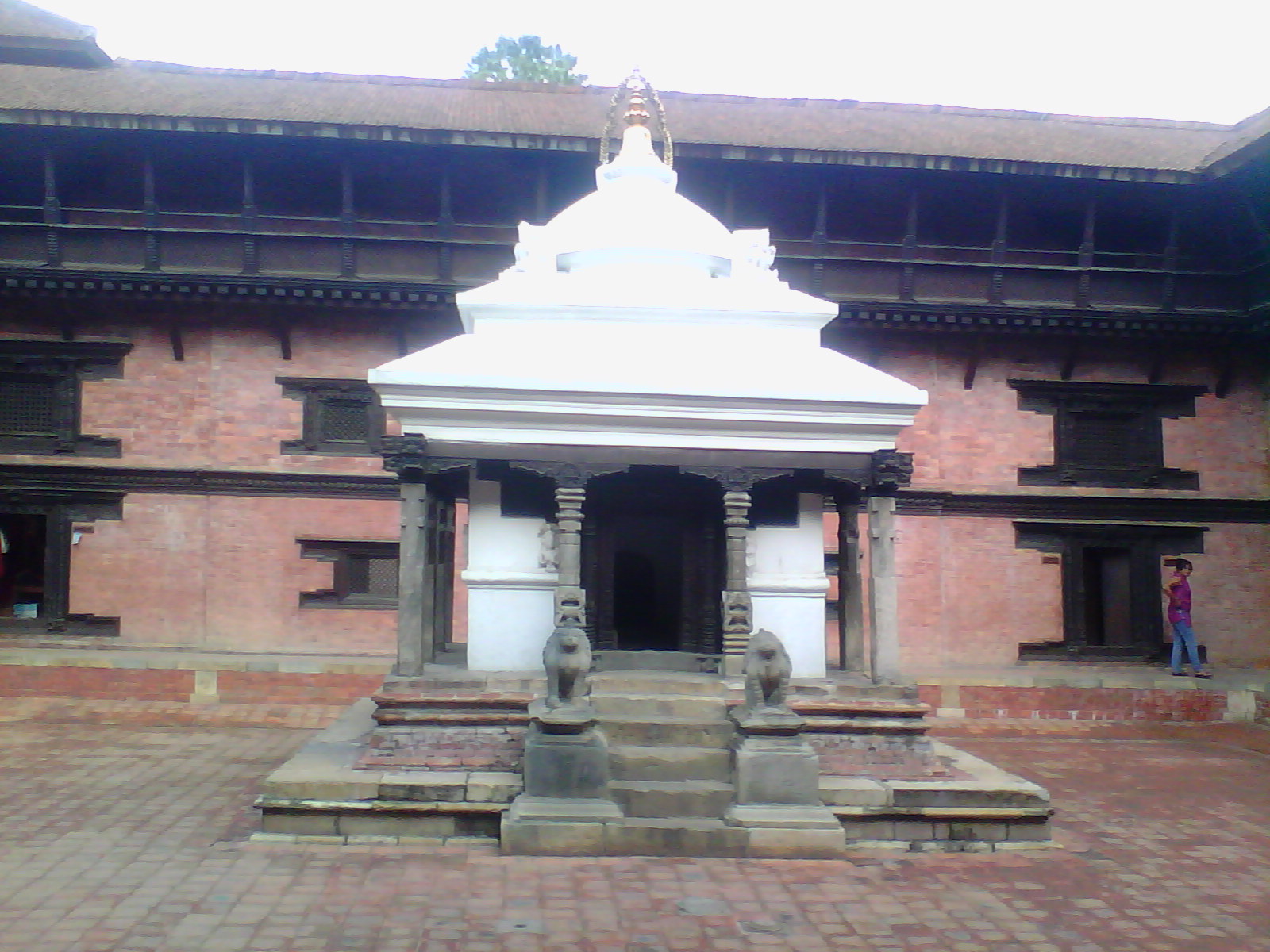
Newari Temple, Basantapur, Kathmandu

Temple Basantapur, Kathmandu

Another Temple around basantapur durbar square, Basantapur, Kathmandu

basantapur durbar square

Temple around basantapur durbar square

basantapur durbar square

basantapur durbar square

A small Temple around basantapur durbar square

Patan durbar square, Lalitpur, Nepal

Patan durbar square, Lalitpur

Patan durbar square, Lalitpur

Patan durbar square, Lalitpur

Patan durbar square, Lalitpur

Patan durbar square, Lalitpur

Patan durbar square, Lalitpur

Krishna Temple, Patan durbar square, Lalitpur

Patan durbar square, Lalitpur

Patan durbar square Museum, Lalitpur

Dhunge Dhara Patan durbar square, Lalitpur

Some of the ancient Nepali Cultural Stuffs to sell around Patan durbar square, Lalitpur

Some of the ancient Nepali Cultural Stuffs to sell around Patan durbar square, Lalitpur

Some of the ancient Nepali Cultural Stuffs and Khukuries to sell around Patan durbar square, Lalitpur

Rato Machindranath Jatra, its Nepali Culture around Valley

Jumat, 03 Juni 2011

15 Most Photographed City & Places on Earth

Check Out the List of 15 Most Photographed City & Places on Earth:

After huge analysis by the Cornell researchers over 35 million Flicker Photos, They Discovered that these 15 Places in different citiesare the most photographed Ones, Check this Out:


15th Most Photographed City: Las Vegas

Landmark: Paris Las Vegas hotel.
Part of the Strip for a dozen years already, this French theme park of a resort—and especially its Eiffel Tower reproduction—is still a big hit with shutterbugs.
Standard shot: A full frontal of the Paris Las Vegas.
Tip: Go away. Sometimes it helps to get some perspective. In this case, you can cross Las Vegas Boulevard and go up into Paris's neighbor, the Bellagio, to get an elevated shot of the hotel spectacle.

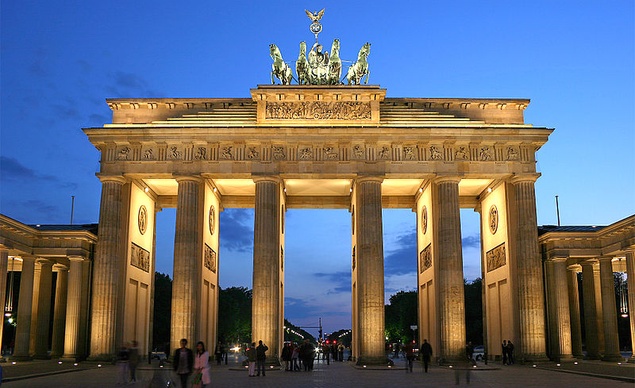
14th Most Photographed City: Berlin, Germany

Landmark: Brandenburg Gate.
Representing the lofty idea of peace and standing 82 feet high, this 18th-century sandstone landmark—Germany's most well-known—can easily make shutterbugs feel like they should fall in line.
Standard shot: Straight on.
Tip: Break the rules. Shoot directly into the sun as it sets to create a compelling silhouette.

13th Most Photographed City: San Diego, California
Landmark: Balboa Park.
Set aside as a public space in 1868, this 1,200-acre park has undergone many stages of development and beautification. Today, its home to theaters, activity centers, landscaped gardens, and at least a dozen museums, with more than its fair share of photo-worthy landscapes.
Standard shot: A zoomed-out focus on the tower of the California Building.
Tip: Try fresh angles. This unusual composition, including just the tip of the ornate California Building, fills the frame with the vibrant blue sky as reflected in this body of water.

12th Most Photographed City: Barcelona, Spain
Landmark: Sagrada Família.
It's hard to know exactly where to point your lens at Gaudí's elaborately ornate, multitowered Gothic cathedral, which couldn't possibly be captured all in a single frame.
Standard shot: From the front entrance, looking up.
Tip: Zoom in. Avoid the standard, straight-on shot (and, in this case, unattractive scaffolding) to zoom in on the ornate details, such as the basilica's steeples.

11th Most Photographed City: Boston
Landmark: Fenway Park.
Boston tourists love snapping photos of this classic ball field, which is the site of All-Star games, a World Series win, and historic moments ranging from a record Mickey Mantle home run to a speech by Franklin D. Roosevelt.
Standard shot: Far, wide.
Tip: Seize the moment. Preset your camera on its rapid-fire, or "sports," setting—but, when the big moment happens, look to the stands instead of the field for inspiration. When you see something animated, such as a fan waving his arms in the air, you'll be ready to snap multiple shots, capturing the silhouette (and the energy of the crowd) against the backdrop of the field.

10th Most Photographed City: Amsterdam, Netherlands
Landmark: Dam Square.
Created in the 13th century as a dam around the Amstel River, this expansive plaza is now flooded with street performers and tourists (and pigeons). It's hard to capture the frenzied feeling in a wide shot.
Standard shot: Wide, with buildings and lots of space.
Tip: Try keeping other people in the frame. There's a natural temptation to shy away from shooting photos of strangers, but including people can give viewers a contextual clue about the relative size of the subject you're photographing. Plus families and groups of travelers can make a space seem more alive. Here, the photographer has used the plaza as a backdrop to capture its local talent. 
9th Most Photographed City: Rome, Italy
Landmark: Colosseum.
This ancient site is filled with the ghosts of dueling gladiators, tormented prisoners, and slaughtered animals, contained, centuries after the fact, within a stunning framework of Corinthian, Doric, and Ionic columns. It's a gorgeous dichotomy indeed, and it's hard to not want to capture it all.
Standard shot: The structure, in its entirety.
Tip: Take advantage of a natural "frame." The archways at Rome's Colosseum give shape to the photo. Shooting through windows, courtyards, doorways, and other openings can create an appealing inside/outside dynamic.

8th Most Photographed City: Seattle
Landmark: Space Needle.
What began as the symbol of the World's Fair in 1962 has now become the symbol of this supercool city. The 360-degree view from the top is expansive, taking in sights from the Puget Sound to Mount Rainier.
Standard shot: From directly below.
Tip: Create a mirror image. Reflective surfaces are common in urban areas. For a unique take on a classic monument, look around for how an object might be mirrored in a car window, a building's glass front, or the surface of a fountain.
 

 7th Most Photographed City: Washington, D.C.
Landmark: Lincoln Memorial.
This marble memorial to the 16th president—featuring Ionic columns, oil-paint murals, and a 120-ton statue of Abe himself—is a striking part of the National Mall.
Standard shot: The full building, from a distance.
Tip: Put things in "perspective." A straight-on shot is the most obvious one to take of the Lincoln Memorial, as it puts the main subject front and center. But including other objects in the picture, like this $5 bill, adds a creative element of whimsy to what might otherwise be a dime-a-dozen postcard image.

6th Most Photographed City: Chicago
Landmark: Cloud Gate sculpture.
Anish Kapoor's 110-ton bean of stainless steel is the shiny centerpiece of Millennium Park's AT&T Plaza and makes for a striking photo in just about any composition.
Standard shot: A direct shot of the bean, taken from the side.
Tip: Avoid the obvious. Whether it's a sculpture, a person, or a building, you can always walk around your subject to get a different view. In this case, the photographer went underneath the bean sculpture—made of highly polished steel and inspired by liquid mercury—and shot upward for a truly unique view.

5th Most Photographed City: Los Angeles
Landmark: Hollywood Walk of Fame.
Begun in 1960 as a Hollywood marketing tool (with filmmaker Stanley Kramer the first honoree), the series of coral-colored stars was at 2,441 in May 2011 and continues to grow.
Standard shot: One star, shot from above.
Tip: Use distance as a frame of reference. Rather than rush in and snap away, pre-visualize your image, thinking about how to photograph a subject from different directions. In this case, the photographer chose to present the stars in a line—a decision that brings context to the shot.


4th Most Photographed City: Paris, France

Landmark: Eiffel Tower.
Gustave Eiffel's 1889 masterpiece, constructed in celebration of the French Revolution's 100th anniversary, is magnificent at any angle; but why choose one that you can easily find on a postcard?
Standard shot: Full-on, from far away.
Tip: Keep an eye out for unexpected patterns. Most pictures of the Eiffel Tower are taken from a distance. But its detailed iron latticework also captures attention. In general, close-up shots of patterns in architecture help a viewer see iconic attractions with fresh eyes.

3rd Most Photographed City: San Francisco
Landmark: Union Square.
The main downtown plaza—used as a rallying site to support troops during the Civil War—is now a mecca for hardcore shopping and people-watching. It's also a great place to hop aboard a cable car.
Standard shot: A wide-angle view of Union Square from the Macy's Building.
Tip: Less is more. A close-up photo can sometimes be as powerful as a wide-angle one. As Belgian fashion designer Dries Van Noten once said: "It's more interesting to have just a picture of a small detail. Then you can dream all the rest around it." Here, a tight shot of a sculpture in the square takes that advice to heart.

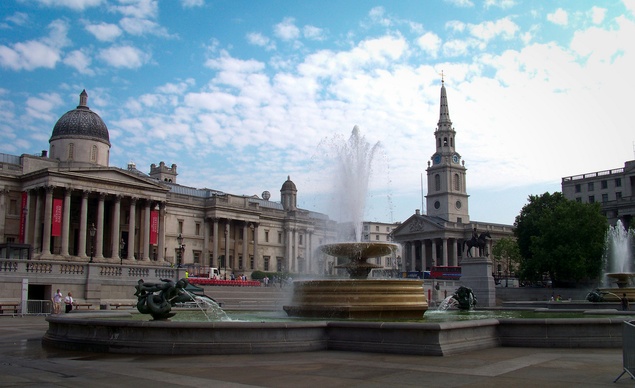
2nd Most Photographed City: London, U.K.
Landmark: Trafalgar Square.
John Nash designed and developed this former palace courtyard into a public space in the early 1800s; it has since been further transformed with sculptures, fountains, and staircases, and has become a local hotspot for protests—all worthy subjects for your lens.
Standard shot: A wide-angle shot of the National Gallery and St. Martin-in-the-Fields church.
Tip: Shift direction. Tilt your lens down to get some surprising texture in the foreground of your shot. Here, the photographer juxtaposed an urban icon, St. Martin-in-the-Fields church, with the surface of a Trafalgar Square fountain. (And, in case you were curious, the tree stumps in this photo were part of an exhibition that warned about deforestation.)

1st Most Photographed City: New York

Landmark: Empire State Building.
Built in one year and 45 days in the midst of the Great Depression, this iconic skyscraper draws about 3.5 million visitors a year to its observatories. On a clear day, you can see as far as Massachusetts, but backward glances at the soaring architecture are pretty seductive, too.
Standard shot: The view of the Empire State Building from the street below.
Tip: Broaden your perspective. Photographing an expected sight from an unexpected place can add a lot to your photo. To get this shot, head 16 blocks north and up 70 floors to the Top of the Rock Observation Deck in Rockefeller Center, where you'll get the best view of the Empire State Building—along with a 360-degree panorama of the city.
Source: BudgetTravel

Interesting Facts about Top 10 things to do in Patagonia

Cerro Torre Los Glaciares National Park Patagonia Argentina
Coastal treasures, ancient forests, dazzling glaciers and incredible wildlife – Patagonia has captured your imagination, but where do you start? We have cherrypicked a few Patagonian delights from the latest Lonely Planet Argentina guidebook to get you started:

1. Whale-watch in Puerto Madryn

Patagonia offers some of the world's best whale-watching and Puerto Madryn is the place to glimpse them. The warm,  enclosed waters along the Golfo Nuevo, Golfo San José and the coastline near Caleta Valdés are prime breeding zones for southern right whales between June and mid-December. A standard whale-watching trip lasts an hour and a half, but longer excursions are available too.

2. Outdoor adventures in El Chaltén
El Chaltén's surrounding mountains are prime hiking, rock climbing and horseback riding territory so if you are into outdoor adventure, this is the spot for you. Think mountain traverses, mountain ascents and rock-climbing classes. You can go horse-riding to the pretty valley of Río de las Vueltas or take a more challenging ride up the Vizcacha hill followed by a barbecue on a traditional ranch. There are also ice-climbing courses and ice treks available.

Perito Moreno Glacier Patagonia Argentina
3. Dinosaur discovery at the Palaeontology Museum

Showcasing the most important fossil finds in Patagonia, this natural-history museum offers outstanding life-sized dinosaur exhibits and more than 1,700 fossil remains of plant and marine life. The three-hour guided visits are a walk through time, along a well-designed nature trail past a wealth of exposed fossils dating as far back as the Tertiary, some 40 million years ago. Speaking of dinosaurs...


4. Walk with the pre-historic
The Dinosaur route in northwest Patagonia is a wonderful adventure. The skeletons of the biggest dinosaurs ever to have walked the planet are, palaeontologists insist, buried in this region's red-rock badlands; and discoveries to date in the area have forced scientists to rethink established theories.


5. Penguin-watch at Punta Tombo

Punta Tombo has a colony of more than half a million Magellanic penguins and attracts many other birds, most notably king and rock cormorants, giant petrels and black oystercatchers. Most nesting areas in the 200-hectare reserve are fenced off: respect the limits and remember that penguins can inflict serious bites. Trelew-based travel agencies run day-long tours but may cancel if bad weather makes the unpaved roads impassable.


6. Explore Cueva de las Manos
The incredible rock art of Cueva de las Manos (Cave of the Hands) was proclaimed a Unesco World Heritage site in 1999. Dating from about 7,370 BC, these polychrome rock paintings cover recesses in the near-vertical walls with imprints of human hands, drawings of guanacos and, from a later period, abstract designs. Free guided walks are given every hour by knowledgeable staff. There is an information centre and a basic confitería, but it is best to bring your own food.

7. Stay at a ranch
Estancia Telken offers a welcoming stay in the pretty countryside of Los Antiguos. This 1915 working sheep and horse ranch 25km south of Perito Moreno has about 210 square kilometers of horseback riding and hiking possibilities, including a worthwhile meander along a creek bed up to the basalt plateau Meseta de Lago Buenos Aires.

8. Escape from it all in Camarones
Camarones takes home the gold for Patagonia's sleepiest coastal village. Empty beaches are perfect for strolling and the sociable townsfolk are masters of the art of shooting the breeze. It is also the closest hub to the lesser-known Cabo Dos Bahías nature reserve, where you can visit 25,000 penguin couples and their fuzzy chicks. The very helpful oceanfront tourist office offers maps, good tips on scenic outings and lodging information.

9. Watch glaciers at Parque National los Glaciares
Glaciar Perito Moreno is the stunning centrepiece of the southern sector of Parque Nacional Los Glaciares. Locally referred to as Glaciar Moreno, it measures 30km long, 5km wide and 60m high, but what makes it exceptional in the world of ice is its constant advance - it creeps forward up to 2m per day, causing building-sized icebergs to calve from its face. In some ways, watching the glacier is a very sedentary park experience, but it manages to nonetheless be thrilling. The main gateway town to the park's southern sector, El Calafate is 80km east of the glacier by road. This is where you will find all the operators for tours and activities too.

10. Dive into watersports
With interesting shipwrecks and sea life nearby, Madryn and the Península Valdés have become Argentina's diving capitals. Lobo Larsen and Scuba Duba are both quality PADI-affiliated operators and the former offers a special excursion for first-time divers. More into windsurfing or kayaking? In high season a hut next to Vernardino Club de Mar offers lessons and rents out regular and wide boards and kayaks by the hour. South of Muelle Piedrabuena, Playa Tomás Curti is a popular windsurfing spot.

Rabu, 18 Mei 2011

7 of Asia's best hotels with a view

7 of Asia's best hotels with a view

Everyone enjoys a stunning skyline.

Whether to start the morning, wind down with a drink in hand at the end of the day, or to regroup with a cool evening swim before a big night out.

1. Four Seasons Hotel, Mumbai

No other hotel except the Four Seasons Mumbai offers this 360-degree view of old Bombay and new Mumbai.
The Four Seasons Hotel Mumbai is perfectly placed in an area that’s undergoing a process of swift gentrification and now calls itself mid-town Mumbai.
On one side the Haji Ali mosque landmark leads south to Colaba and on the other the sealink takes you north to Bandra and beyond.

It is, in part, because of this situational and logistical advantage that the Four Seasons has become one of the top three business hotels in Mumbai since it opened three years ago.
No other hotel offers this 360-degree view of old Bombay and new Mumbai. The choice of views is comprehensive -- Arabian sea view, historic mill district view, Sealink bridge view, Mahalaxmi Racecourse view, with a dash of construction and slums thrown in for good measure -- because that is real Mumbai. Not some picture post-card.
Insider tip: Aer bar, the highest bar in Mumbai, takes over the entire open-air rooftop on the 34th floor of the Four Seasons. With Champagne served by the glass, you can watch the sunset over the Arabian sea, spot the billion-dollar home of Mukesh Ambani and get a bird’s eye-view of some slums too as Mumbai’s richest and poorest jostle for space.


2. Four Seasons Hotel, Sydney

Location, location, location ... who wouldn't want to linger in bath with this view from the Four Seasons Sydney?
With the Opera House and the Harbour Bridge in its backyard, there are few Sydney spots that boast a better view than the Four Seasons Hotel Sydney.
Located by the historic Rocks district and Circular Quay area -- and also prime fireworks location -- the Presidential Suite, Deluxe Royal Suite and two Royal Suites have been re-designed in the style of 1930s New York apartments with bay windows and over-sized bathtubs to make the most of their 34th-floor perch.
From the Presidential and Deluxe Royal suites, spot groups attempting the Bridge Climb in the distance. The two Royal Suites have a sweeping view of Sydney’s Central Business District, Circular Quay and Walsh Bay to be enjoyed from the comfort of the bathtub.
What’s lies outside the windows of the other rooms is not to be sniffed at.
Corner rooms take in the sail-shape of the Opera House, Circular Quay and the Museum of Contemporary Art, while the Premier Harbour View rooms have window-facing beds so you can watch criss-crossing ferries and yachts at all times of the day.
Insider tip: The hotel is almost located on the spot where Captain Arthur Phillip landed in 1788 and established Australia's first convict colony.

3. Hyatt on the Bund, Shanghai 

We weren't kidding about the Jacuzzi at Hyatt on the Bund's VUE bar.
Although there have been a number of new hotels popping up with killer Shanghai views (hats off to Indigo and the Ritz-Carlton Pudong) the view from the Jacuzzi atop Hyatt on the Bund at VUE Bar still reigns supreme as the best Shanghai hotel view in town.
What makes the scene from VUE Bar second to none is two-fold. First, you actually want to sit there and enjoy the view, drink in hand (we recommend the Vue-tini, Jacuzzi dip optional) versus simply taking it in and moving on as you might at the observatory at the Shanghai World Financial Center.
The other part of the view that keeps Hyatt on the Bund in the top spot is that its location in the north Bund gives anyone looking out the window views of both the Pudong and Puxi side of the Bund, something you can’t get from many places lower down the river.
Insider tip: If a few Vue-tinis have you eying the Jacuzzi or the day beds, but you forgot your swimwear, no worries, “Vue Jacuzzi Wear” can be ordered off the Vue Bar drink menu.


4. Marina Bay Sands, Singapore 

With a view like this, who wouldn't want to do a few laps while staying at the Marina Bay Sands?
Guests who book into the Marina Bay Sands aren’t just checking into the world’s most expensive hotel -- it cost S$8 billion (USD$6.6 billion) to build -- but are buying a chance to dip their toe into one of the world’s largest outdoor pools.
For the number crunchers, that’s a 150-meter long infinity pool perched 200 meters above the ground with a stunning, panoramic view overlooking Singapore’s surrounding Central Business District area.
Cleverly, architect Moshe Sadfie has scattered other key viewpoints across the three 55-story towers.
The boat-shaped SkyPark is its most democratic gawking spot; for S$20 (USD$16.26) this is where the masses go to for an unfettered view of the Lion City, and to snap the requisite cheesy “I was here” photo.
Another two options include Justin Quek’s Sky on 57 gourmet Asian restaurant, and the restaurant/bar/club Ku De Ta where hardcore party revelers can spend sunset-to-sunrise.
Inside, of the 2,500 rooms, the City rooms overlook the Marina Bay area including the newly-built Marina Bay Financial Center, and on a clear day, Orchard Road can be spied at a distance. On the other side of the towers, the Garden View rooms overlook the upcoming Gardens by the Bay with the backdrop of the South China Sea.
Still, nothing will quite beat hanging off the side of the pool with its 144.6 meter vanishing edge to feel as if you’re on top of the world.
Insider tip: The hotel’s design was inspired by a deck of cards, and the 1.2-hectare long SkyPark is as long as the Eiffel Tower is high.

5. The Plaza Hotel, Seoul 

Rowdy crowds and candlelight vigils mark the views from The Plaza Hotel, Seoul.
The guests at Seoul’s 400-room Plaza Hotel often get treated to the most dramatic views in Korea, and no, the drama has nothing to do with the skyline.
It all started during the 2002 Korea/Japan World Cup, when almost 100,000 screaming Red Devils filled the piazza in front of Seoul’s City Hall to cheer on the national soccer team on its epic path to the quarterfinals. Since then, the City Hall location has been established as the gathering spot for crowds with a purpose.
Whether the occasion is a national candlelight vigil, a presidential funeral procession, or an impromptu idol concert, Koreans turn out by the tens of thousands a couple of times a year.
Often, they are decked out head-to-toe in clothes befitting each occasion, providing a spectacular sight for the hotel’s patrons who have a front-row bird’s eye view of the piazza -- The Plaza’s 22-story panoramic view of Seoul’s skyline isn’t exactly shabby either.
The hotel itself is also quite a sight, re-opened last November after six months and a 75 billion (USD$69.825 million) makeover; it is one of the most expensive in Korea’s hotel history.
Italian-designer Guido Ciompi, who masterminded the reconstruction, pursued a boutique concept. The result is a fluid, chromatic exterior and interior design, which differs considerably from other five-star hotels in Seoul.
For a secret rendezvous, check out the basement level of The Lounge, tucked behind a floating wooden staircase, a Ciompi trademark.
Insider tip: The Plaza is located where the Jicheonsa Temple used to be during the Chosun Dynasty, where the King would hold ancestral rituals during times of misfortune or when stars fell from the sky.

6. The Ritz-Carlton, Hong Kong 

Haze or no haze, you'll still be able to see all of the city from The Ritz-Carlton, Hong Kong.
The Ritz-Carlton, Hong Kong makes no bones about its claim to be the world’s highest hotel.
Located on the top of Hong Kong's tallest building, the 488-meter tall International Commerce Centre, The Ritz-Carlton has an incredible vantage point of possibly the best panoramic views of Hong Kong.
Cheeky and insightful touches mark the hotel, from the telescopes in all 312-guest rooms to the wheels fitted onto the dining chairs to the Chocolate Library, a cacao-themed lounge that serves a chocolate high tea. The Ritz-Carlton Hong Kong is trying hard to cater to every whim of its 21st-century guests.
Ambiance starts with unbridled glamor at Ozone, the world's highest bar, a curved length of a room in an energetic patchwork of gilded wood, leather and marble serving cocktails, Japanese cuisine, and Asian tapas. Then follows the classy swagger of the restaurants Tosca and Teen Lung Heen where 8,580 bottles of wine line the walls, at the last count.
Some of it is almost braggadocio like the Bar and Lounge with its double fireplaces and two-story tall chimneys, or the world's highest swimming pool complete with 144 screens on the ceiling in case swimmers get bored.
Insider tip: The elevator ride to the Ritz-Carlton's lobby on the 103rd floor is said to be the fastest in Hong Kong, traveling nine meters per second.

7. Lebua at State Tower, Bangkok 

Year after year, the Sky Bar at Bangkok's State Tower at Lebua wins for its stunning view.
In Bangkok, it is the city’s second tallest building, not the tallest that boasts the best view in town.
Perched on the 63-story of the Lebua at State Tower is Sky Bar at Sirocco, still a favorite rooftop watering hole.
Designed with a circular illuminated bar that changes color, the bar performs as a personal backlight to Bangkok’s Chao Phraya River sprawled out beneath.
To drink in the view for longer than a few martinis, there are 221 Tower Club suites spread out from the 51st to 59th floor. Each comes with a colonnaded balcony to enjoy panoramic city or river views throughout your stay.
The crowning glory however is the State Room, located at the top of the 67-story Tower Club at Lebua with floor-to-ceiling windows and privy to 360-degree panoramic views of the city and the majestic river that’s the heart of Bangkok.
Insider tip: For wine connoisseurs, Sky Bar stocks a wide range of vintage wine.
Source: CNN